Luxury Yacht Charter French Polynesia: Tahiti, Bora Bora & Island-Hopping Guide
Explore French Polynesia from the water, where emerald volcanic peaks rise from luminous coral lagoons. An independent editorial guide to luxury yacht charters, catamaran rentals, lagoon navigation across the Society Islands, and realistic passage planning from Tahiti to Bora Bora.
Where Volcanic Pinnacles Meet Sheltered Coral Lagoons
Scattered across an oceanic territory roughly the size of Western Europe, the numerous islands and atolls of French Polynesia represent one of the world's most visually dramatic marine cruising grounds.
An independent luxury yacht charter in French Polynesia delivers an experience fundamentally distinct from resort-based tourism. While luxury overwater bungalows anchor guests to a single reef shoreline, chartering a private crewed motor yacht, sailing catamaran, or monohull unlocks a mobile sanctuary. You can wake inside the calm, barrier-reef-protected lagoon of Taha'a, sail across blue-water channels accompanied by trade winds, and drop anchor beneath the towering silhouette of Mount Otemanu in Bora Bora before shoreside tour boats arrive.
Unlike the granitic boulders of the Seychelles or the open coastal sounds of the Mediterranean, cruising French Polynesia centers predominantly on the Society Islands. Here, high volcanic islands are ringed by protective barrier reefs that enclose broad, translucent saltwater basins. Navigating these waters requires an appreciation of reef passes (passes), coral pinnacles (motus and coral heads), and variable lagoon depths.
Lagoon Fairways & Vessel Draft
Cruising the Society Islands involves balancing calm lagoon cruising with oceanic channel crossings. Lagoon basins feature brilliant turquoise waters broken by shallow coral heads and marked navigational beacons.
A yacht's draft dictates which anchorages, sandy shallows, and outer islets (motus) can be safely approached. Deep-draft motor yachts must often remain in designated deep-water channels, while shallow-draft catamarans often enjoy greater flexibility to approach perimeter shallows, always subject to local depths, tides, and reef protections.
Types of French Polynesia Yacht Charters
Charter configurations across French Polynesia reflect the South Pacific’s gentle lagoon environments, inter-island trade winds, and remote island logistics.
| Charter Format | Typical Purpose & Duration | Crew & Operational Structure | Key Questions to Ask |
|---|---|---|---|
| Crewed Sailing Catamarans | 7 to 10+ days exploring the Leeward Society Islands (Raiatea, Taha'a, Bora Bora, Huahine) | Dedicated skipper with culinary/hospitality crew as contracted to manage navigation and meals | What is the vessel's water draft? Are air conditioning and water-maker capacities continuous? Are diving arrangements included? |
| Luxury Crewed Motor Yachts | Multi-island term cruising between Tahiti, Moorea, and the Leeward Islands | Full commercial maritime crew scaled to vessel requirements (Captain, Engineer, Deckhands, Chef, Stewardesses) | Can the yacht enter shallow lagoon fairways, or will it anchor outside reef passes? What are the fuel burn rates at cruising speed? |
| Crewed Monohull Sailing Yachts | Traditional bluewater sailing charters, romantic escapes, and ocean passage enthusiasts | Licensed skipper and support crew where arranged | How does the monohull's draft limit anchoring depth in shallow motu anchorages compared to multihulls? |
| Bareboat Sailing Charters | Self-directed sailing holidays for experienced skippers departing primary bases on Raiatea | Operated by the charterer, subject to verifiable sailing experience, operator vetting, and applicable licensing standards | What geographic boundaries and night-sailing restrictions apply? Is passage outside the barrier reef to Bora Bora permitted? |
| Private Day Charters | 4 to 8 hours focused on lagoon snorkeling, marine wildlife observation, and scenic cruising | Local licensed skipper/guide | Does the charter include private motu visits, snorkeling gear, and refreshment provisions? |
| Multi-Day Island Hopping | 10 to 14 days combining the Windward Islands (Tahiti/Moorea) with the Leeward Islands | Dedicated professional crew handling inter-island open-ocean passages | Is the itinerary structured as a one-way cruise, or does it require a return sail against prevailing trade winds? |
The Main Yacht Charter Destinations in French Polynesia
The Society Islands are divided into the Windward Islands (Tahiti and Moorea) and the Leeward Islands (Raiatea, Taha'a, Bora Bora, and Huahine), each offering a distinct cruising atmosphere.
Tahiti
Home to Faa'a International Airport (PPT) and the capital of Papeete, Tahiti serves as the principal logistical gateway to French Polynesia. While the island features black-sand beaches, towering waterfalls, and modern superyacht berths along the Papeete waterfront marina, most private charter itineraries treat Tahiti as an embarkation point or staging hub before cruising to Moorea or connecting via domestic flights to Raiatea.
Moorea
Situated just across the Sea of the Moon from Tahiti, Moorea is distinguished by dramatic volcanic spires that plunge steeply into turquoise lagoons. Cook's Bay and Opunohu Bay provide deep-water, sheltered fjord-like anchorages where yachts can lie safely in settled weather, framed by pineapple-clad valleys and jagged emerald ridges.
Bora Bora
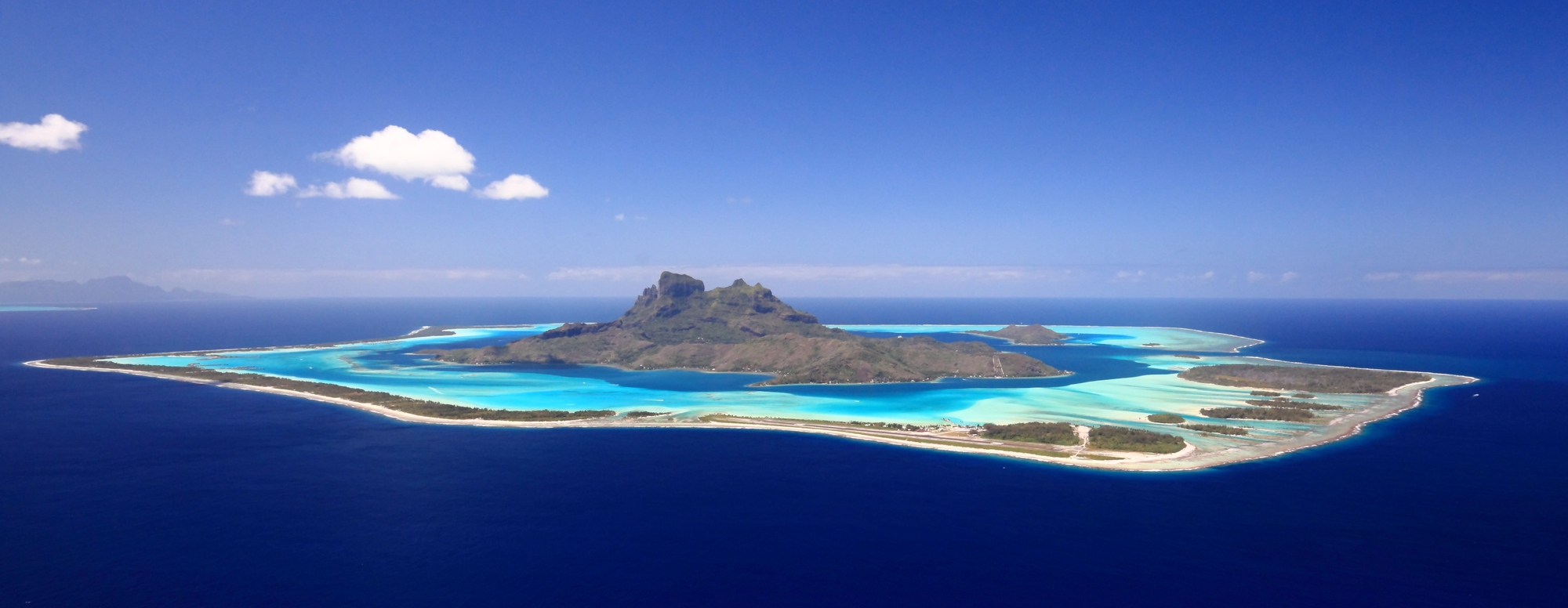
Widely regarded as the visual centerpiece of French Polynesia, Bora Bora features an immense coral lagoon encircling the volcanic monolith of Mount Otemanu. Access from the open ocean is gained via a single navigable deep-water pass—Teavanui Pass on the western shore. Cruising inside is carefully managed to protect fragile coral gardens, with yachts anchoring in designated sandy basins or utilizing managed mooring buoys.
Raiatea
Known as the "Sacred Isle," Raiatea is the administrative and yachting capital of the Leeward Islands. It hosts the primary charter bases, marine repair facilities, and deep-water fuel docks. Raiatea shares a vast continuous barrier-reef lagoon with neighboring Taha'a and is home to Taputapuatea, a UNESCO World Heritage marae complex that served as the ancient spiritual epicenter of Polynesian oceanic navigation.
Taha'a
Enclosed within the same protective barrier reef as Raiatea, Taha'a offers a peaceful, authentic island setting characterized by family-run vanilla plantations and pearl farms. Its western barrier reef harbors the celebrated Coral River near Motu Tautau, where charter guests can drift-snorkel over coral heads in crystal-clear water alongside harmless blacktip reef sharks and spotted eagle rays.
Huahine
Lying to the east of Raiatea, Huahine is an unhurried, lush island divided into Huahine Nui and Huahine Iti. Known for preserved stone temples, sacred blue-eyed freshwater eels, and deep sheltered bays like Port Bourayne and Avea Bay, it provides an authentic cultural stopover on extended island-hopping itineraries when sea conditions allow.
Raiatea & Taha'a: The Natural Yachting Hub
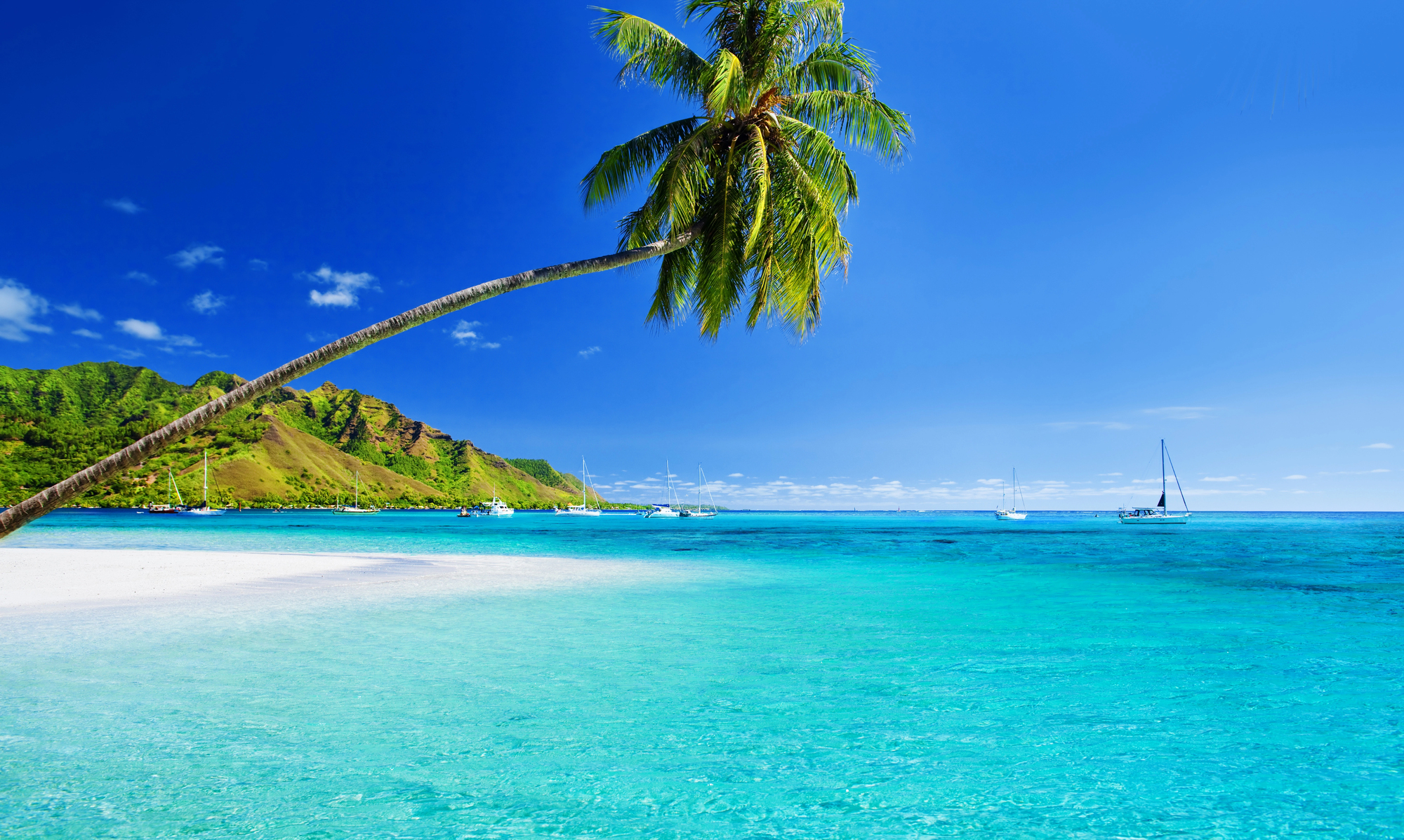
While Bora Bora commands international fame, experienced charterers recognize that Raiatea and Taha'a form the true operational and geographic heart of yacht chartering in French Polynesia. Because both islands are encircled by a single continuous barrier reef, vessels can cruise between them across a sheltered interior lagoon without exiting into the open ocean.
This shared lagoon provides protection from South Pacific ocean swells, making it ideal for relaxed sailing, private motu anchorages, and tender exploration. Cruising north along the western coast of Taha'a brings yachts into tranquil bays scented by curing vanilla beans, while the perimeter reef offers calm water for paddleboarding, kayaking, and drift-snorkeling over shallow coral gardens.
Departing from charter bases around Uturoa on Raiatea provides unmatched strategic flexibility: captains can monitor weather windows inside the protected lagoon before making the open-water blue-water passage toward Bora Bora.
French Polynesia Yacht Charter Itinerary Concepts
Passage planning in the South Pacific requires balancing calm lagoon exploration with open-ocean channel transits exposed to prevailing trade winds.
| Itinerary Concept | Suggested Duration | Cruising Area & Islands | Practical Navigation Considerations |
|---|---|---|---|
| Raiatea, Taha'a & Bora Bora Classic | 7 to 8 Days | Leeward Islands: Depart Raiatea, explore Taha'a lagoon, open passage to Bora Bora | The standard Leeward circuit. Combines sheltered lagoon cruising in Raiatea and Taha'a with an open-water ocean crossing to Bora Bora. One-way charters require coordination with operator bases. |
| Raiatea & Taha'a Lagoon Sanctuary | 5 to 7 Days | Protected shared lagoon: Uturoa, Haamene Bay, Motu Tautau, Apu Bay | Cruises primarily inside the protective barrier reef with minimal exposure to open-ocean swells. Exceptional for families or guests sensitive to motion; relaxed anchoring near pearl farms and vanilla plantations. |
| Tahiti & Moorea Short Escape | 4 to 7 Days | Windward Islands: Marina Taina (Papeete), Cook's Bay, Opunohu Bay | Convenient departures directly from Tahiti. Involves crossing the open Sea of the Moon channel, which can experience moderate chop during brisk trade winds. Excellent mountain scenery. |
| Extended Society Islands Circuit | 10 to 14 Days | Huahine, Raiatea, Taha'a, and Bora Bora (optionally including Moorea) | Allows relaxed exploration of eastern Huahine before cruising toward Bora Bora. Longer passages require favorable weather windows to avoid sailing directly upwind into prevailing trade winds. |
| Specialist Tuamotu Expedition | 10 to 14+ Days | Tuamotu Atolls: Rangiroa, Fakarava, Tikehau | Advanced expedition cruising. Requires seaworthy vessels, slack-water transit timing through high-current atoll passes, and self-sufficient provisioning in remote coral atolls. |
Lagoons, Reefs and Responsible Cruising
French Polynesia’s lagoons and barrier reefs represent delicate, highly protected tropical ecosystems. Preserving water clarity, living coral formations, and abundant marine life requires strict adherence to local maritime and environmental guidelines.
Coral Reef Protection & Anchoring Protocols
Anchoring carelessly can cause severe, long-term damage to fragile coral heads and sensitive lagoon seabed habitats. Whenever navigating interior waters, visiting yachts are strongly encouraged to utilize authorized ecological mooring buoys or drop anchor strictly within verified white-sand basins where visual seabed inspection confirms no live coral is present. Mandatory mooring buoy zones, anchoring restrictions, and conservation fees vary by island, lagoon, and municipal maritime jurisdiction—such as the managed zones in Bora Bora. Charterers should verify current local anchorage directives and buoy policies with their captain and local harbor authorities.
Navigating Reef Passes (Passes)
Barrier reefs enclose the lagoons, and transit between the open ocean and interior waters is conducted through defined reef passes. As oceanic swells drive water across barrier reefs, lagoon drainage back into the open sea can generate powerful outward currents, tidal rips, and localized standing waves within passes. The intensity of pass currents varies considerably depending on oceanic swell energy, tidal states, and local channel bathymetry. Safe transit demands adequate vessel engine power, attentive chart plotting, and navigation timed to favorable slack-water or calm tidal windows.
Marine Wildlife Etiquette & Waste Handling
Responsible cruising requires mindful waste management and respectful wildlife observation. Charterers should confirm their vessel’s waste-handling capabilities and adhere strictly to applicable local wastewater discharge restrictions in interior lagoon waters. In addition, marine wildlife should be observed without touching, chasing, feeding, or crowding animals such as humpback whales, dolphins, manta rays, and sea turtles. Wildlife interaction guidelines, permitted distances, and commercial tour licensing vary depending on the species, island, and marine reserve zone.
Departure Bases, Arrival and Practical Logistics
Planning a yacht charter in French Polynesia involves coordinating international air travel with domestic inter-island flights and maritime embarkation.
1. International Arrival & Inter-Island Connections
International travelers arrive at Faa'a International Airport (PPT) on the main island of Tahiti, served by regular long-haul flights from North America, Europe, and the Pacific Rim. If your charter departs from Tahiti or Moorea, road transfers to Marina Taina or the Papeete waterfront can be arranged depending on your yacht's berth.
However, because the primary sailing and catamaran fleet is based in the Leeward Islands, many charterers connect to scheduled domestic flights operated by regional carriers from Papeete to Raiatea Airport (RFP). Taxis and pre-arranged shuttles operate between Raiatea Airport and the primary marina docks in Uturoa. Travelers should directly confirm current flight schedules, connection times, luggage allowances, and transfer arrangements with their operator or travel agent prior to departure.
2. Provisioning & Luggage Considerations
While Raiatea features well-stocked municipal supermarkets and local fruit markets in Uturoa, remote motu anchorages in Taha'a or Huahine offer minimal retail facilities. On crewed luxury charters, provisions—including French cheeses, fine wines, and fresh tropical produce—are arranged prior to arrival according to guest preference sheets. Because yacht cabins and companionways are designed for compact efficiency, guests should travel with soft-sided duffel bags rather than rigid hard-shell suitcases that are difficult to stow.
3. Currency, Entry Formalities & Documentation
The official currency is the Pacific Franc (CFP Franc / XPF), which is pegged to the Euro. Credit cards are widely accepted at major marinas and resorts on Tahiti and Bora Bora, but carrying local cash is advisable for smaller pearl farms, vanilla plantations, and village bakeries in the outer islands. French Polynesia maintains its own specific entry requirements and customs regulations distinct from metropolitan France. Travelers should independently check current official entry rules, passport validity requirements, and visa regulations applicable to their nationality and itinerary well in advance of departure.
French Polynesia Yacht Charter Costs Explained
Charter pricing in French Polynesia varies according to the vessel’s length overall, shipyard build, year of construction, crew complement, and whether the arrangement operates under an inclusive package or an expense-based contract.
To evaluate quotations accurately, distinguish between the advertised base charter rate and the total expected expenditure:
1. Base Charter Fee
The base rate covers the hire of the yacht for the specified period, with inclusions varying depending on the provider, vessel category, and agreed contract terms. On crewed vessels, captain and crew wages are commonly included in the base fee, while bareboat rates cover the vessel and standard safety equipment. Base rates fluctuate according to high season demand and holiday peak dates.
2. The Advance Provisioning Allowance (APA) & Operating Expenses
On larger crewed motor yachts and certain luxury catamarans, operating expenses are funded separately via an Advance Provisioning Allowance (APA). The APA is an operating deposit managed directly by the captain to cover variable costs such as propulsion fuel, generator fuel for air conditioning, customized food and beverage provisioning, docking fees, and lagoon mooring buoys. However, not all charter vessels utilize an APA; some catamarans and smaller yachts operate under inclusive packages or alternative expense structures. The exact handling of receipts, accounting reviews, and the refund of unused funds or settlement of additional expenses is governed by the signed charter agreement.
3. Fuel Surcharges, One-Way Relocation & Taxes
Fuel costs in French Polynesia reflect remote South Pacific transport logistics. Sailing catamarans operating under trade winds burn significantly less fuel than high-speed motor yachts. If you elect a one-way itinerary (such as embarking in Raiatea and disembarking in Bora Bora), operators frequently apply a delivery fee to reposition the vessel back to its primary base. Transactions are subject to applicable territorial taxes, tourist levies, and local fees, which vary depending on the route, operator, and relevant maritime tax regulations.
What to Request in an Itemised French Polynesia Yacht Charter Quote
To ensure transparent comparison between charter operators, request a written, line-by-line quote confirming:
For a comprehensive international perspective on how operating expenses and contracts are structured on larger vessels, consult our detailed analysis on how much it costs to charter a yacht for a week.
Safety, Crew and Charter Agreements in French Polynesia
Chartering in French Polynesia falls under the legal jurisdiction of French and French Polynesian maritime regulations. Understanding maritime compliance, crew qualifications, and passenger safety standards ensures a secure voyage.
When evaluating private yacht charters in the South Pacific, verify the following standards:
1. Commercial Maritime Registration & Guest Capacity
Registration, operating permissions, safety inspections and permitted guest capacity depend on the vessel's flag, classification, charter arrangement and applicable French Polynesian maritime requirements. Before booking, ask the provider to confirm that the yacht is legally authorized for the proposed charter activity and guest count, and request appropriate evidence of safety compliance. Do not assume that every charter vessel operates under an identical registration or inspection regime.
2. Professional Captain & Crew Credentials
For crewed charters, confirm that the captain and relevant crew hold qualifications appropriate to the vessel, its flag, operating area and charter arrangement. Requirements can differ by yacht type and governing maritime rules. Local experience navigating coral heads, marked lagoon channels, reef passes and changing South Pacific conditions is especially valuable. Ask the operator to explain the captain's credentials, experience and safety procedures before booking.
3. Commercial Charter Insurance & Written Contracts
Appropriate commercial charter marine insurance, guest liability coverage, operating permissions, and contractual protections must be verified for the particular charter. Charters are commonly executed under recognized international brokerage agreements (such as MYBA or CYBA forms) or established commercial operator contracts that clearly set out cancellation rights, weather contingency terms, security deposit conditions, and mechanical breakdown procedures.
Best Time to Charter a Yacht in French Polynesia
Lying in the tropical southern hemisphere, French Polynesia enjoys warm temperatures year-round, typically averaging between 78°F and 86°F (25°C to 30°C). However, trade wind strength, precipitation, and sea states evolve across two primary seasons and two transitional periods.
| Season | Months | Weather & Maritime Profile | Cruising Dynamics |
|---|---|---|---|
| Dry Season (Austral Winter) | May to October | Lower humidity, cooler evenings, and generally reduced rainfall. Steady easterly to southeasterly trade winds (the Mara'amu). | Peak charter season with active sailing conditions. Ocean passages between islands can experience moderate chop and swell, while interior lagoons generally offer greater protection behind barrier reefs. |
| Spring Transition | November | Transitioning wind patterns, rising humidity, warming ocean temperatures, variable breezes. | A pleasant shoulder cruising window with fewer yachts across anchorages ahead of the austral summer. |
| Humid Season (Austral Summer) | December to March | Higher temperatures, higher humidity, and more frequent tropical rainfall. Wind patterns are more variable and can be punctuated by convective squalls. | A warmer, more humid period where cruising plans require monitoring localized weather patterns and squall activity. Note: South Pacific tropical cyclone season occurs during this window. |
| Autumn Transition | April | Easing humidity, transitioning wind patterns, and variable sea conditions. | A favored shoulder month for charterers seeking uncrowded moorings before peak winter trade winds establish. |
Captain's Navigational Note on the Mara'amu: During the dry winter season (especially June through August), strong high-pressure systems in the South Pacific can generate the Mara'amu—a sustained southeasterly trade wind that can blow briskly for several consecutive days. While barrier reefs break ocean swells to provide shelter inside lagoons, open-water crossings between Raiatea and Bora Bora require proper sail reefing, vessel suitability, and vigilant passage planning.
Which French Polynesia Charter Option Fits Your Plans?
Matching your group's profile to the proper vessel category and charter format ensures optimal comfort, safety, and financial value.
Honeymoon & Romantic Luxury
Tailored for couples seeking privacy and scenery. A crewed catamaran or express yacht with a dedicated captain and private chef provides intimate anchorages beside Bora Bora’s motus, private beach dining, and sunset sails without shoreside crowds.
- Air conditioning runtime and cabin privacy.
- Whether private motu dining setups are included.
- Flexible departure options from Bora Bora or Raiatea.
Family Lagoon Exploration
Best suited for families seeking calm waters and water sports. A spacious sailing or power catamaran offers wide trampolines, stable swim platforms, and a shallower draft that often allows closer approach to sheltered anchorages in the Raiatea and Taha'a lagoon.
- Child safety netting and proper-fitting life jackets.
- Water toys included (paddleboards, kayaks, sea scooters).
- Chef flexibility for child-friendly menus.
Active Sailing Enthusiasts
Configured for experienced sailors seeking open-water trade wind passages. A performance cruising catamaran or bluewater monohull allows spirited ocean sailing between Huahine, Raiatea, and Bora Bora under steady South Pacific breezes.
- Sail inventory (gennaker, asymmetric spinnaker) and rigging.
- Passage restrictions between islands.
- Bareboat qualification criteria and security deposit terms.
Snorkeling & Marine Encounters
Designed for travelers focused on coral gardens, manta ray cleaning stations, and drift passes. Requires a vessel equipped with quality snorkeling gear, seaworthy tenders, and a knowledgeable local guide.
- Onboard compressor and scuba diving permissions if diving.
- Tender horsepower for navigating drift passes safely.
- Local crew familiarity with wildlife encounter sites.
Luxury Private Celebrations
Configured for milestone birthdays, anniversaries, or corporate retreats. A fully crewed luxury motor yacht provides multi-deck entertainment, formal culinary service, and spacious interior salons.
- Legal passenger limits under commercial maritime registry.
- Advance Provisioning Allowance (APA) expense accounting.
- Vessel draft for entering specific shallow lagoon passes.
Multi-Island Extended Voyages
Tailored for 10- to 14-day itineraries covering both the Windward (Tahiti/Moorea) and Leeward (Huahine/Raiatea/Bora Bora) islands. Requires an autonomous vessel capable of comfortable open-ocean crossings.
- Fuel range, water-maker output, and provisioning capacity.
- One-way drop-off allowances without return penalties.
- Weather-window flexibility built into the charter agreement.
Practical Checklist for Planning Your French Polynesia Yacht Charter
Chartering a private vessel in the remote South Pacific requires careful planning. Follow these essential guidelines to ensure a seamless experience on the water.
Vessel Identity
Confirm the yacht's actual name, build year, and verified interior photographs to ensure the vessel matches the listing presentation.
Embarkation Island
Confirm whether embarkation is in Tahiti (Marina Taina) or Raiatea (Uturoa) to ensure domestic flight tickets are booked accurately.
Itinerary Feasibility
Align your planned 7-day or 10-day window with realistic distances and prevailing trade winds (avoiding long upwind open-ocean sails).
Crew & Service
Verify whether your captain and chef are full-time dedicated crew, and review culinary preferences well in advance of departure.
Documentation & Insurance
Ensure the yacht holds verified maritime documentation, operating authorization, and charter liability insurance appropriate to its flag, operating area, and charter structure.
Vessel Draft
Verify that your yacht’s draft permits access to shallow lagoon fairways, motu anchorages, and designated coral passes.
Itemised Costs
Request a transparent, written quote detailing base vessel hire, crew fees, fuel provisions, local taxes, and mooring buoy charges.
Relocation Terms
Clarify whether a one-way delivery fee applies if disembarking in Bora Bora rather than returning the yacht to Raiatea.
Weather Policies
Review contractual cancellation and rescheduling terms regarding sustained tropical trade winds (Mara'amu) or severe weather.
Frequently Asked Questions
Clear, independent answers to common questions about chartering a private luxury yacht in French Polynesia and the Society Islands.
Can you charter a luxury yacht in French Polynesia?
Yes. French Polynesia hosts a professional fleet of privately chartered yachts ranging from luxury crewed sailing and power catamarans to multi-deck superyachts. Charters are primarily focused on the Society Islands (Tahiti, Moorea, Raiatea, Taha'a, Bora Bora, and Huahine), with specialist expedition vessels occasionally operating in the Tuamotu atolls. Charters are booked as multi-day or weekly private voyages tailored to your party.
How much does a French Polynesia yacht charter cost?
Total costs are structured around the base vessel hire, which varies according to the yacht's length overall, shipyard build, build year, and crew complement. Additional components include captain and crew fees, provisioning, fuel allowances or consumption surcharges, local taxes, and discretionary crew gratuity. Term charters on larger crewed yachts typically operate on weekly base rates plus an Advance Provisioning Allowance (APA) to cover operating expenses. Always request a transparent, written quotation itemizing all mandatory fees before committing to a deposit.
Is Tahiti or Bora Bora better for a yacht charter?
Tahiti is the primary international arrival airport and logistical center, making it practical for short trips to nearby Moorea, but it has fewer sheltered lagoon anchorages. Bora Bora offers the world's most dramatic lagoon scenery and luxury anchorages, but it is not the primary departure hub. The most practical solution is often embarking in nearby Raiatea (reached via domestic flight from Tahiti), exploring the shared Raiatea/Taha'a lagoon, and sailing to Bora Bora for the finale of your charter.
Where do French Polynesia yacht charters usually depart?
The vast majority of sailing and catamaran charters depart from the island of Raiatea (marinas near Uturoa), which serves as the yachting capital of the Leeward Society Islands. Larger luxury motor yachts and superyachts frequently embark from Tahiti (Marina Taina or Papeete Harbor) or Bora Bora by prior arrangement, depending on guest travel plans and vessel cruising logistics.
Can you charter a catamaran in French Polynesia?
Yes. Catamarans (both sailing and power multihulls) represent a popular and versatile charter format in French Polynesia. Their shallower water draft often allows them to navigate shallower lagoon sections and anchor nearer to perimeter motu shallows where deep-draft motor yachts cannot go, always subject to local reef depths and navigational markers. Their wide beams provide natural stability at anchor and generous outdoor living areas.
Can you sail between Raiatea, Taha'a and Bora Bora?
Yes. Raiatea and Taha'a share a barrier-reef lagoon, allowing many local cruising routes between the islands without an exposed ocean crossing. Reaching Bora Bora requires a separate open-water passage. The route, duration and conditions depend on the yacht, departure point, weather and sea state, so your skipper or charter provider should confirm a suitable passage plan. Prevailing trade winds do not guarantee a comfortable crossing.
How many days do you need for a Society Islands yacht charter?
A 7- to 8-day charter is ideal for exploring the classic Raiatea, Taha'a, and Bora Bora circuit without rushing. If you wish to include Huahine to the east or explore both the Windward Islands (Tahiti/Moorea) and Leeward Islands, an itinerary of 10 to 14 days is strongly advised to accommodate open-ocean passages comfortably and provide flexibility for weather.
Are bareboat yacht charters available in French Polynesia?
Yes. Several international charter companies maintain bareboat sailing fleets based on Raiatea. However, due to remote South Pacific conditions, complex coral reef passes, and distance between islands, operators typically require comprehensive sailing resumes, verifiable experience, and specific qualification standards or skipper checkouts before approving a bareboat charter. Many travelers prefer hiring a local professional skipper to navigate coral heads and reef passes safely.
What is the best time of year to charter a yacht in French Polynesia?
The dry season (austral winter) from May through October is the most popular cruising period, characterized by lower humidity, generally reduced rainfall, and active easterly trade winds. Shoulder months like April and November offer variable sea conditions and uncrowded anchorages. The austral summer (December to March) brings higher humidity, more variable winds, and frequent tropical showers, alongside the South Pacific cyclone season.
What should you verify before booking a French Polynesia yacht charter?
Request a written agreement confirming the specific yacht’s name and build year, valid operating authorization and charter liability insurance, captain credentials, exact embarkation and disembarkation islands, water-maker and air conditioning capabilities, itemized cost inclusions (fuel, provisions, taxes, mooring buoys), and the operator’s defined cancellation policies regarding severe weather.
Explore French Polynesia Yacht Charter Options with Confidence
Whether you envision drift-snorkeling over the vibrant coral gardens of Taha'a, relaxing at anchor behind a deserted motu, or sailing before South Pacific trade winds toward the iconic silhouette of Bora Bora, French Polynesia provides an extraordinary maritime voyage. Use this independent guide to evaluate charter formats, request transparent itemized quotes, and verify provider credentials.