Greece Yacht Charter
Discover Greece by private yacht, from the whitewashed islands of the Cyclades to the emerald waters of the Ionian Sea. Explore five remarkable cruising regions, each offering its own blend of secluded anchorages, historic harbours and unforgettable Mediterranean scenery.
An Archipelago of Vast Contrast, Ancient Stone and Sapphire Seas
With thousands of islands, islets, and over 13,000 kilometres of indented coastline, Greece stands as one of the world's most versatile yacht charter territories.
An independent Greece yacht charter provides maritime freedom that shoreside travel cannot replicate. Rather than being confined to a single ferry timetable or resort jetty, chartering a private motor yacht, crewed catamaran, or sailing yacht allows you to step directly into ancient harbours, drop anchor in secluded coves accessible only by sea, and explore whitewashed island villages before day ferries arrive.
What makes a luxury yacht charter in Greece extraordinary is its striking geographical diversity. The verdant, pine-sheltered waters of the Sporades and the gentle breezes of the Ionian Islands offer a dramatic contrast to the wind-swept, sun-drenched granite of the Cyclades, the fortress-crowned harbours of the Dodecanese, or the protected classical cruising grounds of the Saronic Gulf. Selecting the optimal charter region depends on the season, embarkation port, personal cruising preferences, and prevailing Mediterranean weather systems.
To explore how Greece compares with other European yachting grounds, consult our comprehensive Mediterranean yacht charter guide or browse our global destinations directory.
Five Cruising Realms, One Extraordinary Nation
Greece is not a single, uniform cruising ground. Its five primary yachting regions feature fundamentally different wind systems, passage lengths, architectural styles, and shelter profiles.
The Five Greek Yacht Charter Regions
Compare the distinctive character, typical wind conditions, landscape profiles, and primary embarkation ports across Greece’s five premier cruising grounds.
| Cruising Region | Landscape & Atmosphere | Wind & Sea Conditions | Key Islands & Ports | Ideal For |
|---|---|---|---|---|
| 1. Sporades | Densely forested pine hills, turquoise coves, quiet fishing quays | Moderate Variable light to moderate breezes; seasonal Meltemi exposure in open channels | Skiathos, Skopelos, Alonissos, Skyros | Nature lovers, secluded anchorages, family swimming |
| 2. Cyclades | Whitewashed cube houses, volcanic cliffs, vibrant nightlife | Spirited Summer Meltemi winds (often Force 5–8) from north/north-east | Mykonos, Paros, Naxos, Santorini, Milos | Experienced sailors, iconic scenery, dynamic shoreside dining |
| 3. Ionian Islands | Lush olive groves, Venetian architecture, sheltered sounds | Gentle Afternoon thermal breezes (Maistros), generally calmer mornings | Corfu, Lefkada, Kefalonia, Ithaca, Zakynthos | Family charters, relaxed sailing, first-time charterers |
| 4. Dodecanese | Medieval castles, neoclassical mansions, eastern Aegean history | Brisk Prevailing north-westerly summer winds; moderate open crossings | Rhodes, Kos, Symi, Patmos, Kalymnos | History enthusiasts, long-range cruising, dramatic harbours |
| 5. Saronic Gulf | Classical temple ruins, neoclassical waterfronts, car-free towns | Sheltered Calmer waters generally sheltered by the Peloponnese mainland | Aegina, Poros, Hydra, Spetses, Agistri | Short-break charters, Athens departures, historic elegance |
A. Sporades Yacht Charter
Lying off the eastern coast of mainland Greece, the Sporades archipelago—chiefly comprising Skiathos, Skopelos, Alonissos, and Skyros—presents a lush, pine-scented landscape that stands in stark contrast to the barren rock of the southern Aegean. Here, fragrant pine forests sweep straight down to pale pebble beaches and clear turquoise waters.
A Sporades yacht charter typically departs from the harbour of Skiathos, with its direct international air connections, before cruising into the anchorages of Skopelos, renowned for its Byzantine chapels and verdant hillside orchards. Eastward lies Alonissos and the National Marine Park of Alonissos Northern Sporades—one of the Mediterranean's largest marine protected areas, safeguarding vital populations of the endangered Mediterranean monk seal (Monachus monachus) alongside resident dolphins and rare seabirds.
B. Cyclades Yacht Charter
The Cyclades represent the quintessential image of maritime Greece: dazzling sugar-cube houses cascading down arid cliffs, blue-domed churches, ancient stone ruins, and energetic harbour promenades.
An ambitious Cyclades yacht charter links celebrated focal points with tranquil island havens. From the lively beach clubs and upscale quayside nightlife of Mykonos and the volcanic majesty of Santorini's towering caldera to the authentic villages of Naxos, the marble quarries of Paros, and the extraordinary white volcanic sea caves of Milos (Kleftiko), the variety is unmatched.
However, chartering in the Cyclades requires thoughtful seamanship and realistic itinerary expectations. During the midsummer months (especially July and August), the central Aegean is influenced by the Meltemi (Etesians)—a dry north to north-easterly wind that can regularly reach Force 6 to 8. The Meltemi can generate significant open-sea swell across wide channels, requiring captains to adapt cruising routes, take shelter on southern leeward shores, or reposition into protected island sounds. Slower sailing vessels and catamarans must plan realistic passage distances rather than attempting to circumnavigate the entire archipelago in seven days.
C. Ionian Islands Yacht Charter
Stretching along the western coast of Greece from the Albanian border down to the Peloponnese, the Ionian Islands offer an idyllic alternative to the windswept central Aegean.
Governed for centuries by the Venetian Republic, islands such as Corfu (Kerkyra), Paxos, Antipaxos, Lefkada, Kefalonia, Ithaca, and Zakynthos display elegant Italianate waterfronts, lush cypress and olive groves, and striking limestone cliffs plunging into brilliant aquamarine water. The iconic white pebble arc of Shipwreck Beach (Navagio) in Zakynthos and the turquoise sea caves of Paxos represent classic day-cruising highlights when sea conditions allow.
From a sailing perspective, an Ionian yacht charter is celebrated for its manageable weather patterns. Mornings are often calm, frequently followed in the early afternoon by a thermal north-westerly breeze known as the Maistros (typically Force 3 to 5), which tends to subside toward sunset, though conditions remain variable. This rhythm makes the inland sea between Lefkada, Meganisi, Kefalonia, and legendary Ithaca a favoured cruising ground for family yacht charters, multihulls, and guests seeking short passages.
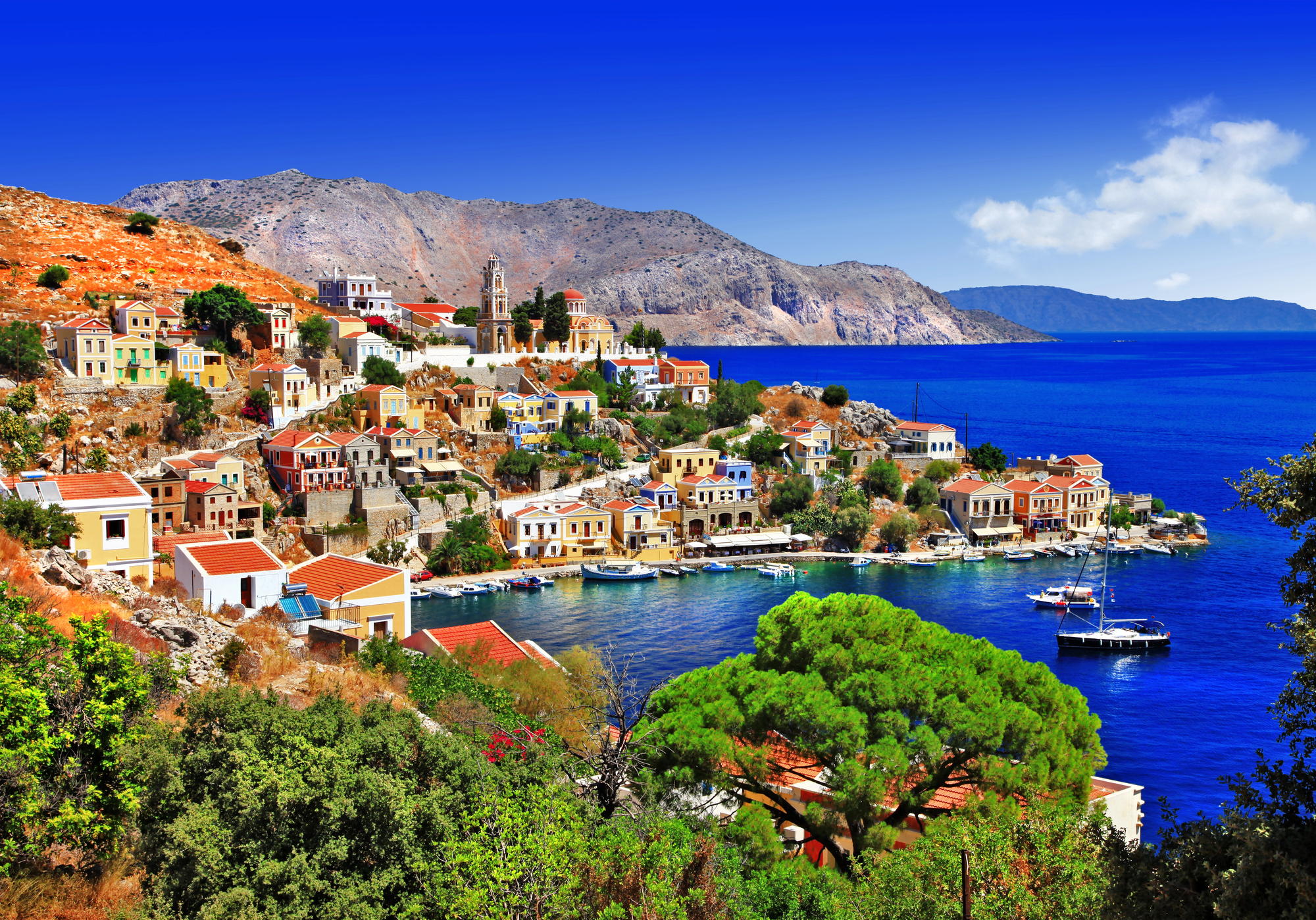
D. Dodecanese Yacht Charter
Curving along the south-western coastline of Asia Minor, the twelve primary islands of the Dodecanese blend rich Hellenic, Byzantine, Ottoman, and Crusader history with dramatic Aegean landscapes.
A Dodecanese yacht charter links medieval fortified ports like Rhodes (the historic stronghold of the Knights of Saint John) and Kos with the neoclassical harbour basin of Symi, where pastel mansions rise amphitheatre-like from deep azure water. To the north, the sacred island of Patmos features the fortified Monastery of Saint John the Theologian, while Kalymnos offers sheer limestone sea cliffs renowned amongst international rock climbers.
Cruising the Dodecanese involves longer open passages between islands, with summer winds typically blowing from the north-west. While the Meltemi is felt across the northern reaches of the chain, the islands often provide sheltered coastal lee runs along their southern and eastern shores. While its proximity to Turkey makes dual-nation itineraries an intriguing prospect, cross-border cruising is subject to strict bilateral maritime clearances, customs protocols, and charter license authorisations.
E. Saronic Gulf Yacht Charter
Tucked immediately south of the Greek capital between Attica and the Peloponnese, the Saronic Gulf and adjacent Argolic Gulf represent Greece’s most accessible and historically storied yacht charter grounds.
Departing from prime Athens superyacht marinas—such as Marina Alimos, Flisvos Marina, or Zea Marina—charter guests can cruise smoothly to Aegina, famous for its pistachio groves and the ancient Temple of Aphaia. Further south lies Poros, separated from the Peloponnese by a picturesque narrow sea channel, and the timeless, vehicle-free island of Hydra, where stone captain's mansions line an amphitheatrical marble harbour that forbids all wheeled motor transport. Continuing westward brings you to aristocratic Spetses, celebrated for its grand naval history and elegant pine-shaded coastal estates.
The paramount operational advantage of a Saronic Gulf yacht charter is its relative shelter. Protected in part by the mountainous topography of the Peloponnese, the Saronic waters are often less exposed to the heavy summer Meltemi that impacts the open Cyclades. This makes it an outstanding choice for luxury day charters, long-weekend breaks from Athens, corporate hospitality, and relaxed family holidays seeking shorter passage times.
Types of Yachts Available for Greek Charters
The Greek charter fleet is among the largest and most varied in the world, encompassing everything from high-speed motor yachts to traditional wooden motor sailors.
Luxury Motor Yachts
Planing and semi-displacement motor yachts offer the cruising speed necessary to bridge longer distances between Greek archipelagos. They allow guests to cross from Athens to Mykonos in a morning, subject to weather, sea state, and fuel planning. Depending on the vessel, amenities may include stabilisers, hydraulic swim platforms, and spacious sun decks.
Superyachts & Megayachts
Operating prominently out of Athens, Mykonos, and Corfu, 50-metre-plus superyachts deliver bespoke luxury living. Onboard amenities vary by vessel but frequently include multi-deck salons, beach clubs, dedicated culinary staff, and water-toy collections, managed under professional maritime crews.
Crewed Catamarans
Sailing and power multihulls are exceptionally popular across Greece, particularly in the Ionian and Saronic waters. Their wide beam provides generous social cockpits, forward trampolines, and natural stability at anchor. While their shallow draft permits closer approach in quiet coves, anchoring remains strictly governed by local seabed regulations and port authority directives.
Sailing Yachts & Gulets
Chartering a modern performance monohull connects sailors with ancient Aegean maritime traditions when steady breezes build across open channels. Additionally, traditional handcrafted wooden gulets and motor sailors offer wide teak deck spaces and atmospheric cruising, especially popular across the Dodecanese and Sporades.
To compare specifications and charter styles across the Mediterranean, explore our guides to private yacht charter and luxury yacht charters.
Best Time to Charter a Yacht in Greece
Greece enjoys an extensive Mediterranean charter season extending from May through October. However, cruising conditions, crowd density, harbour berthing availability, and wind patterns evolve significantly across the calendar.
While midsummer delivers vibrant beach-club energy and warm sea temperatures, late spring and early autumn offer pleasant cruising weather and far more accessible town quays.
| Season | Months | Weather & Sea Conditions | Cruising Dynamics |
|---|---|---|---|
| Spring / Early Season | May to June | Pleasant Sunny, mild to warm days (22°C–27°C); refreshing sea temperatures warming gradually. Moderate breezes with lower Meltemi likelihood. | Islands are lush and green; town quays in Hydra, Symi, and Skiathos are less crowded. Excellent for sailing without persistent high-summer winds. |
| Peak Summer | July to August | High Season / Meltemi Hot, sunny weather (30°C–35°C), long daylight hours, and warm sea temperatures. Meltemi winds active in the Aegean. | Height of shoreside energy, beach clubs, and nightlife. High demand for berths; Cyclades can experience spirited sea states requiring adaptive routing. |
| Late Summer / Autumn | September to October | Warm & Easing Balmy air and warm sea temperatures (23°C–25°C). Meltemi winds generally subside; comfortable daytime conditions. | Widely favoured by experienced charterers for relaxed passages, quieter anchorages, and accessible tavernas across all five regions. |
| Winter Period | November to April | Quiet Cooler, variable days with occasional rain squalls and seasonal coastal winds. | Commercial leisure charter availability is limited and weather-dependent. Most charter yachts undergo scheduled winter maintenance or haul-out. |
Captain's Navigational Note on the Meltemi: The Meltemi blows predominantly from late June through early September across the central Aegean (Cyclades, Dodecanese, and eastern Sporades). It typically strengthens in the early afternoon and can blow persistently for days at Force 6 to 8. Experienced captains continually assess daily Hellenic National Meteorological Service (HNMS) bulletins and will adjust passage routes into protected leeward channels to preserve passenger comfort and safety.
Greece Yacht Charter Costs Explained
Charter pricing in Greece operates under established maritime contractual frameworks. While Mediterranean Yacht Brokers Association (MYBA) terms and Greek Commercial Yacht Charter Contracts are standard for crewed motor yachts and superyachts, contract structures, inclusions, and terms depend on the vessel, operator, and charter category.
1. Base Charter Fee
The base charter fee covers the hire of the yacht, crew services, and the vessel's standard marine insurance policy as stipulated in the contract. Rates fluctuate depending on the yacht's length overall (LOA), shipyard pedigree, age, recent refit status, and seasonal demand (high season vs. low season). Specific crew provisions and insurance clauses depend on the individual charter contract.
2. The Advance Provisioning Allowance (APA)
On charters operating under standard plus-expenses terms, operating costs are funded separately via an Advance Provisioning Allowance (APA). The APA is an operating expense deposit managed directly by the captain on behalf of the charterer. It is estimated based on the specific yacht model, intended cruising distances across the islands, and guest culinary preferences, typically covering:
- Fuel & Generator Usage: Main propulsion engines, generator hours for air conditioning, and tender/water-toy fuel. Fuel consumption varies widely based on vessel hull design and cruising speed.
- Provisions & Beverages: Tailored food, fine Greek wines, champagne, and spirits provisioned according to your group's pre-charter preference sheets.
- Berthing & Town Quay Fees: Municipal harbour dues and private marina slip fees (such as in Mykonos, Rhodes, or Flisvos Marina). Municipal town quays in Greece are generally very modest, while modern private marinas carry higher tariffs.
- Canal Dues & Marine Park Permits: Corinth Canal transit tariffs where applicable, and marine protected area entry tokens where required.
The captain maintains an itemised record of expenses with receipts available for review during the charter. At the conclusion of the charter, any unused APA funds are reconciled and refunded in accordance with the charter agreement, while any expenses exceeding the initial deposit are settled prior to disembarkation.
3. Greek Value Added Tax (VAT) & Gratuities
Yacht charters embarking in Greek territorial waters are subject to Greek statutory Value Added Tax (VAT). Applicable VAT rates and fiscal treatments depend on the vessel's commercial charter license category, the embarkation and disembarkation ports, and qualifying international passage criteria under prevailing Hellenic tax legislation. Crew gratuities are discretionary but customary in Mediterranean yachting, with charterers typically offering an amount reflecting their satisfaction with the crew's service.
For a comprehensive, line-by-line financial breakdown across international destinations, consult our detailed analysis on how much it costs to charter a yacht for a week.
Sample Seven-Day Greek Yacht Charter Routes
These sample routes illustrate active week-long itineraries across Greece’s five premier cruising grounds. Qualified captains adapt passage plans daily to reflect prevailing weather, Meltemi forecasts, and berth availability.
Route 5: Rhodes, Symi, Tilos, Nisyros & Kos (Rhodes Circuit)
Embarkation & Disembarkation: Rhodes (Mandraki Harbour) | Ideal vessel: Cruising Motor Yacht, Gulet or Blue-Water Multihull
Route 2: Lefkada, Meganisi, Ithaca & Kefalonia (Ionian Sound)
Embarkation & Disembarkation: Lefkada Marina | Ideal vessel: Crewed Catamaran, Motor Yacht or Sailing Sloop
Route 3: Skiathos, Skopelos, Alonissos & Peristera (Sporades Circuit)
Embarkation & Disembarkation: Skiathos Port | Ideal vessel: Sailing Monohull, Catamaran or Motor Yacht
Route 4: Paros, Naxos, Schinoussa, Koufonisia & Mykonos (Cyclades Circuit)
Embarkation & Disembarkation: Paros (Parikia) or Mykonos (Tourlos) | Ideal vessel: Capable Motor Yacht or Seaworthy Sloop
Route 5: Rhodes, Symi, Tilos, Nisyros & Kos (Dodecanese Passage)
Embarkation & Disembarkation: Rhodes (Mandraki) or Kos Marina | Ideal vessel: Cruising Motor Yacht, Gulet or Blue-Water Multihull
Practical Planning Advice for Your Greek Yacht Charter
Chartering in Greece requires careful alignment of cruising region, hull type, and seasonal weather patterns. Here are the three fundamental pillars of planning your Greek voyage.
Select the Right Region for Your Season
Match your travel dates and group preferences to prevailing regional wind patterns. If chartering during July or August, the sheltered Ionian or Saronic waters are often favoured for relaxed family cruising, while experienced sailors may welcome the spirited Meltemi conditions of the Cyclades or Dodecanese.
Match Yacht Hull & Speed to Distances
Choose your yacht format based on your desired itinerary. Fast motor yachts provide the speed needed to cover longer distances between distant Aegean islands, while catamarans and sailing vessels excel at unhurried island-hopping and family relaxation at anchor in the Sporades or Ionian.
Review Contract Terms, APA & VAT
Work with an independent charter broker to review contract terms (such as MYBA or Greek commercial formats), verify Advance Provisioning Allowance (APA) expense deposits, understand applicable Greek VAT treatment, and submit guest culinary preference sheets well in advance.
Frequently Asked Questions
Clear, independent answers to common questions about chartering a yacht in Greece and its island archipelagos.
What is the best region to charter a yacht in Greece?
The ideal region depends on your cruising style, sailing experience, and season. The Ionian Islands and Saronic Gulf generally offer calmer, sheltered waters well-suited for families and first-time charterers. The Cyclades provide iconic whitewashed villages and lively nightlife but can experience strong Meltemi winds in midsummer. The Sporades offer lush pine forests and protected marine reserves, while the Dodecanese combine historic medieval castles with long-distance cruising.
How much does a Greece yacht charter cost?
Charter pricing varies substantially according to the yacht's length overall, shipyard pedigree, year of build or refit, season, and crew complement. Contracts can be structured on base charter fees plus operating expenses handled via the Advance Provisioning Allowance (APA), alongside applicable Greek VAT. For an objective overview of international pricing mechanics, consult our comprehensive guide on how much it costs to charter a yacht for a week.
What is the Meltemi, and how does it affect yacht charters?
The Meltemi is a dry northerly wind system that blows across the Aegean Sea—most intensely across the Cyclades and Dodecanese—from late June through early September. Reaching Force 6 to 8 (22 to 35+ knots), it can create choppy open-sea passages. Experienced captains continually assess weather forecasts and adapt itineraries by using protected leeward island coastlines or selecting sheltered routes in the Saronic or Ionian seas.
Can you visit Santorini and Mykonos on a one-week charter?
While technically possible on a fast, capable motor yacht in settled weather, combining Mykonos and Santorini within a standard seven-day charter is often ambitious due to the 65+ nautical miles of open, potentially rough sea separating them. A more enjoyable route focuses either on the northern/central Cyclades (Mykonos, Paros, Naxos) or the southern islands (Santorini, Ios, Milos), allowing adequate time to explore without prolonged passages.
What is the best month to charter a yacht in Greece?
June and September are widely regarded by seasoned charterers as excellent months. They offer warm daytime weather, pleasant sea temperatures for swimming, and far less crowded town quays and anchorages, avoiding the peak Meltemi winds and high midsummer tourist density of July and August.
Where do most Greek yacht charters depart from?
Athens is the primary departure hub, hosting major modern marinas such as Marina Alimos, Flisvos Marina, and Zea Marina, providing direct access to the Saronic Gulf and Cyclades. Regional hubs include Corfu and Lefkada for the Ionian, Skiathos for the Sporades, Rhodes and Kos for the Dodecanese, and Mykonos or Paros for central Cycladic charters.
Are fuel, food, and marina fees included in the charter price?
Under standard MYBA and Greek commercial crewed charter terms, food, beverages, fuel, and harbour fees are not included in the base charter rate; they are funded separately through the Advance Provisioning Allowance (APA). On smaller bareboat or skippered catamarans, charters may operate under different cost structures, with provisions purchased locally and fuel settled upon return.
Is Greece suitable for family yacht charters?
Yes. Greece is exceptionally well-suited to family charters, particularly in the Ionian Islands and Saronic Gulf, where short cruising distances, calm seas, and sheltered bays provide ideal conditions for children to swim, paddleboard, and explore historic sites. Depending on the vessel, charter yachts provide certified safety equipment, water toys, and professional crews capable of tailoring daily menus and itineraries to guests of all ages.
Can you anchor anywhere in Greece?
Greece offers abundant free anchoring in natural bays, but restrictions apply in designated archaeological underwater zones, military perimeters, swimming channels, and protected marine parks (such as the Alonissos Marine Park and Zakynthos National Marine Park). Greek port authorities (Limenarcheio) also regulate town quay berthing, requiring vessels to anchor with stern-to lines in municipal harbours.
Can a Greek charter yacht cruise to Turkey?
Dual-nation itineraries combining the Dodecanese islands (such as Rhodes, Symi, or Kos) with the Turkish coast are possible on appropriately licensed vessels. However, cruising between Greece and Turkey involves crossing an international border and entering separate maritime jurisdictions. It requires formal customs clearance, passport control, and compliance with bilateral commercial charter regulations, meaning such passages must be pre-approved and cannot be undertaken informally.
Discover the Greek Islands from the Water
Whether you envision sailing between the pine-clad bays of the Sporades, exploring the timeless marble alleys of Hydra, watching the sunset over Santorini’s caldera, or cruising the emerald coves of the Ionian Sea, Greece offers an incomparable yachting odyssey. Explore our destination guides or connect with an experienced charter broker to match the ideal yacht to your journey.
Charter A Yacht is an independent editorial resource and charter broker-referral website. We do not own, manage, or operate charter vessels directly.