Motor Yacht vs Sailing Yacht: Which Should You Choose?
Deciding between a luxury motor yacht and a performance sailing yacht shapes every dimension of your time on the water. From deck volume and passage speeds to the timeless engagement of wind-powered navigation, explore an objective analysis designed to guide your charter holiday or prospective vessel purchase.
The Journey Versus the Destination
The debate between motor and sail is one of the oldest in maritime leisure, yet it remains intensely relevant for modern charterers and prospective owners alike.
At its heart, evaluating a motor yacht vs sailing yacht is not simply an assessment of mechanical propulsion; it reflects how you wish to experience the marine environment. Are you drawn to waking in a secluded anchorage and motoring swiftly at twenty knots to an exclusive harbour thirty nautical miles away? Or do you relish the sensory engagement of setting canvas, cutting the engine, and letting the trim of the sails and the direction of the breeze shape your passage?
Neither platform is universally superior across all scenarios. A motor yacht typically offers greater internal volume for its length, multi-tiered outdoor decks, and predictable transit times. In contrast, a modern luxury sailing yacht connects guests directly with classical seamanship, quieter cruising under canvas, and maritime heritage. Understanding the practical, financial, and operational distinctions of each platform ensures you select a yacht that matches your holiday rhythm and sea-going expectations.
Lifestyle Alignment Over Rigid Dogma
"A successful charter or acquisition does not begin with length overall; it begins with an honest audit of your daily expectations. If passage-making is an interruption between anchorages, a motor yacht provides speed. If the passage itself is the essence of your escape, sail remains peerless."
What Is a Luxury Motor Yacht?
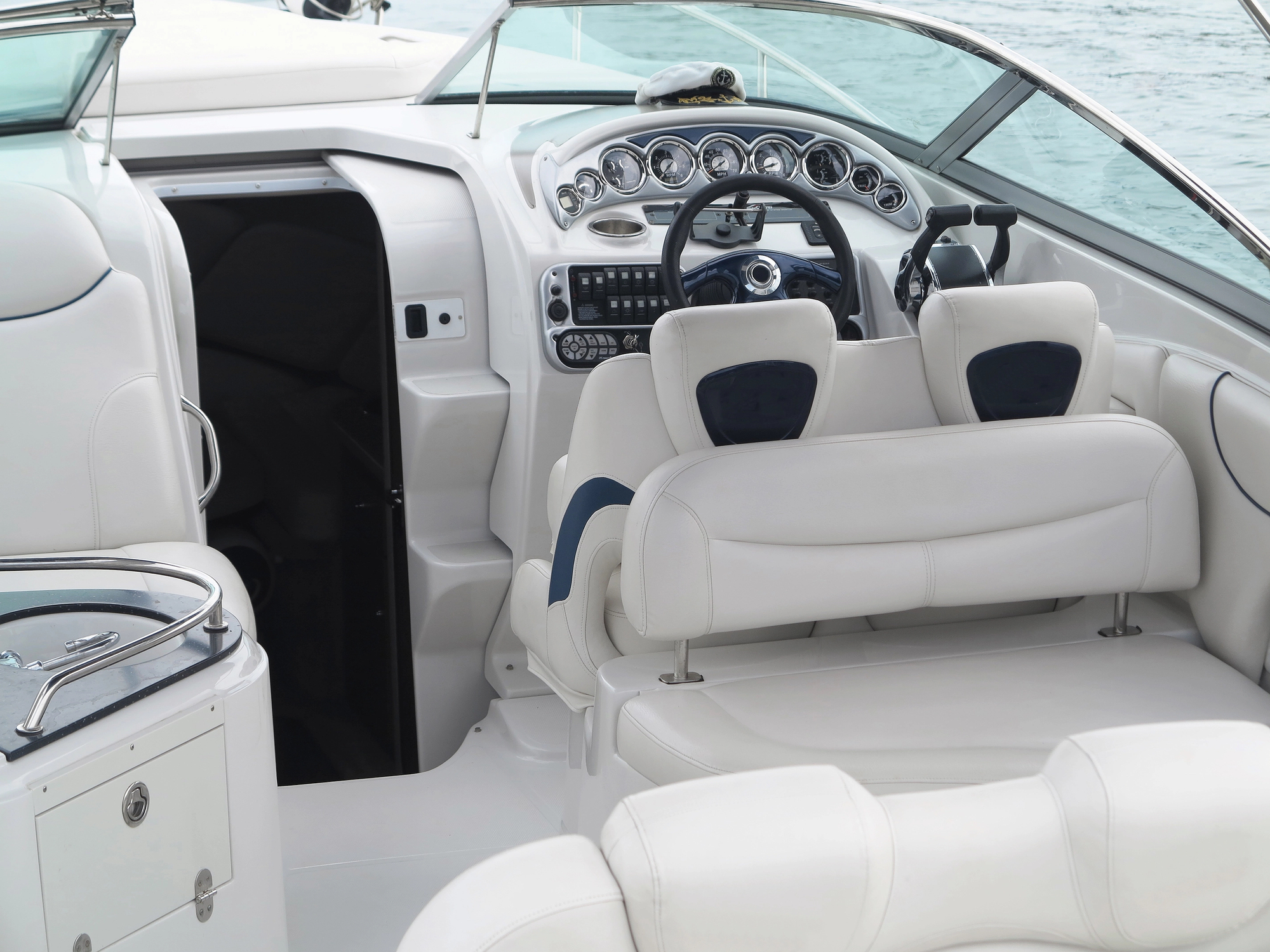
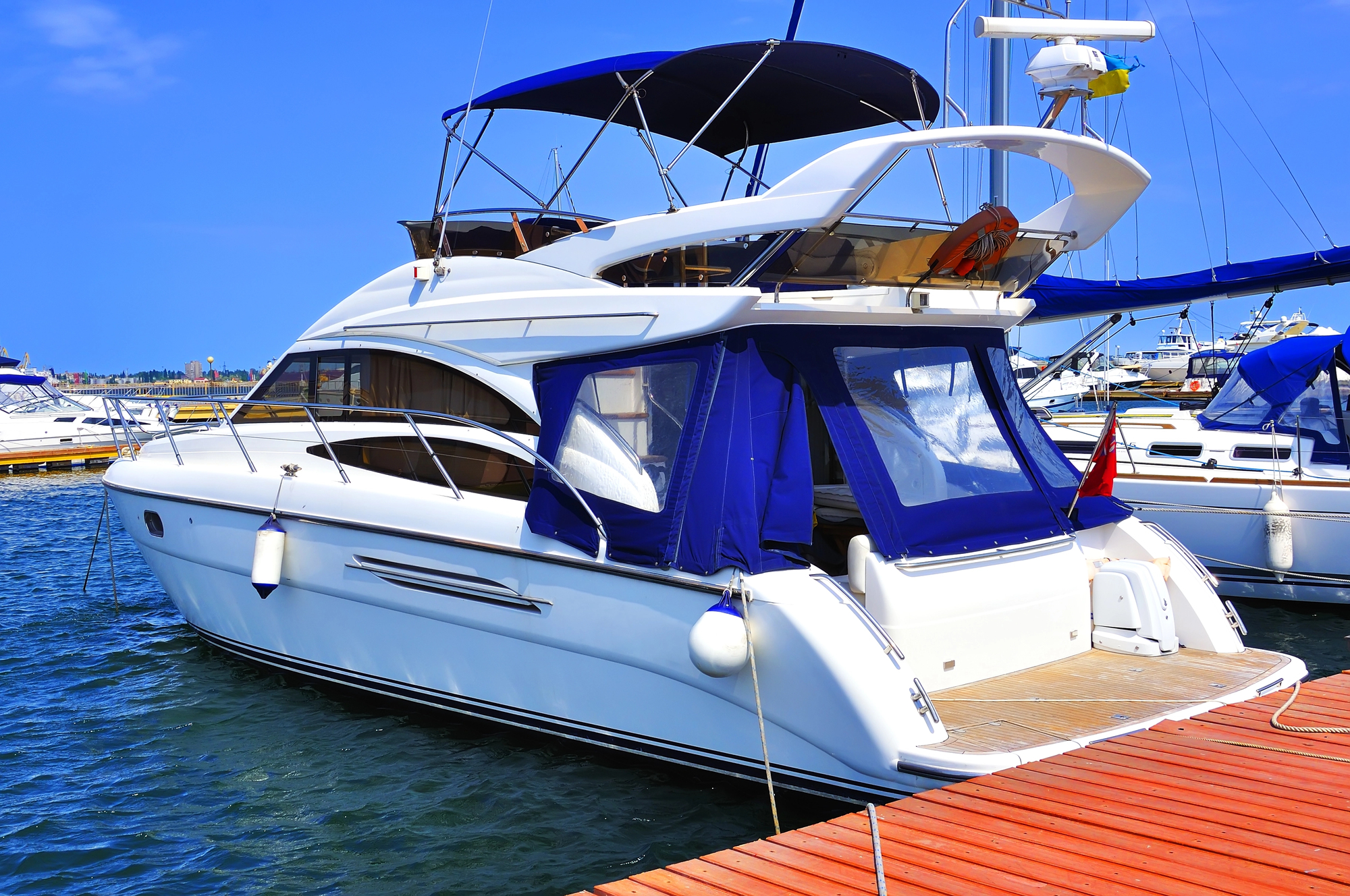
A luxury motor yacht is a vessel propelled solely by marine internal combustion engines or modern hybrid systems, designed to prioritize interior volume, extensive accommodation, and operational speed.
From smaller luxury cruisers to large custom superyachts, motor yachts are typically characterized by multi-tiered superstructures, full-beam owner suites, expansive flybridges, and dedicated swim platforms. Because naval architects do not have to accommodate mast compression, standing rigging loads, or deep draft ballast keels, interior arrangements can be configured with open-plan layouts comparable to luxury residential villas.
Key Attributes of Modern Motor Yachts
While specifications differ substantially across planing, semi-displacement, and full-displacement hull designs, luxury motor yachts generally feature:
- Substantial Gross Tonnage: Multi-deck construction allows distinct separation between owner, guest, and crew circulation, accommodating en-suite staterooms, formal dining saloons, and dedicated galley facilities.
- Active Roll Reduction: Modern gyro-stabilizers and computer-controlled fin systems significantly dampen roll while underway and when resting at anchor, although vessel motion cannot be eliminated entirely in heavy sea states.
- Dedicated Tender Garages: Stern or bow garages house tenders, water skis, and personal watercraft without encroaching upon primary guest relaxation decks.
- Scheduled Passage Planning: Cruising speeds vary widely by hull and sea conditions. Motor propulsion can make passage planning less dependent on wind direction, although weather and safety still determine schedules.
What Is a Luxury Sailing Yacht?
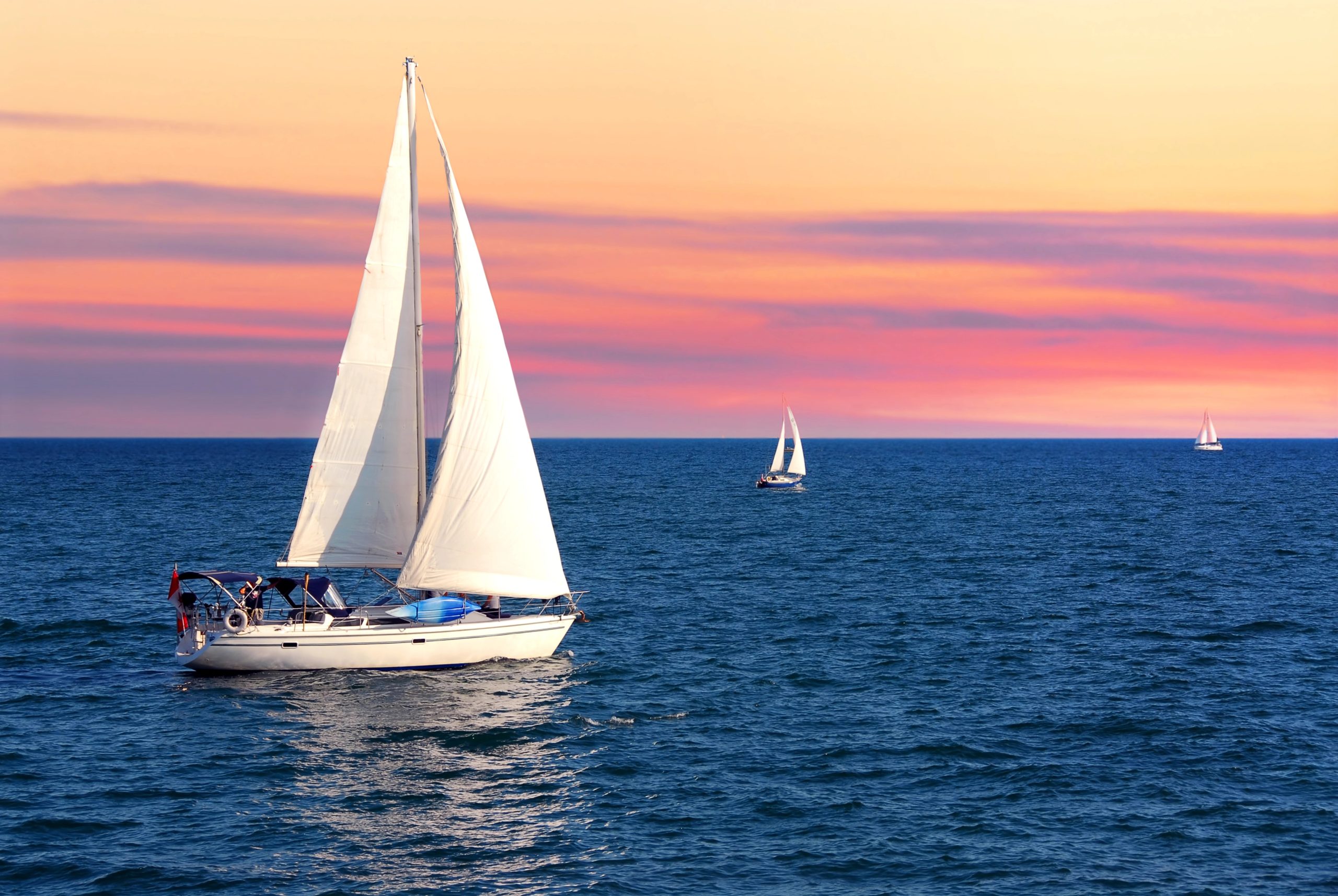
A luxury sailing yacht relies primarily on wind power harnessed through sails and standing rigging, supported by auxiliary marine diesel engines for close-quarters harbour maneuvering and passage-making in calm conditions or light airs.
Contemporary sailing yachts differ fundamentally from historic vessels. Today's fleet ranges from high-performance carbon-composite sloops and twin-masted ketches to expansive multihulls (catamarans) and 60-metre-plus superyacht schooners. Automated furling systems, captive hydraulic winches, and advanced deck hardware allow large sail plans to be trimmed efficiently by professional crews.
The Modern Sailing Experience
Contemporary luxury sailing yachts combine authentic nautical tradition with modern onboard systems:
- Cruising Under Sail: When the main engine is disengaged and the sails are set, the reduction in mechanical noise and exhaust creates an engaging, peaceful connection to the sea.
- Participatory Seamanship: Guests may be able to observe or, with the captain’s permission and supervision, participate in sailing activities.
- Integrated Hotel Systems: Modern sailing yachts are equipped with air conditioning, en-suite staterooms, desalination watermakers, and high-standard galleys, powered by sound-shielded auxiliary generators when at anchor.
- Multihull Evolution: Luxury sailing catamarans have expanded the market, offering wide beams, level sailing characteristics, and shallow drafts that grant access to shallow anchorages inaccessible to deep-keel monohulls.
Motor Yacht vs Sailing Yacht: At a Glance
An objective evaluation across key operational, functional, and lifestyle parameters to help clarify your preferences.
| Evaluation Factor | Luxury Motor Yacht | Luxury Sailing Yacht (Monohull / Catamaran) |
|---|---|---|
| Cruising Style | Fast, direct coastal transits; multi-tier living across separate vertical decks. | Immersive wind-powered navigation; emphasis on the sensory experience of voyaging. |
| Typical Speed | Highly variable by hull design, speed setting and conditions; some planing yachts travel much faster than displacement yachts. | Variable with wind, hull design and conditions; performance sailing yachts can be considerably faster than cruising designs. |
| Internal Living Space | Substantial internal volume for length; full-beam saloons, flybridges, and master staterooms. | More compact accommodation in monohulls due to streamlined hull forms; catamarans provide expansive single-level living. |
| Motion at Sea | Generally level running; roll dampened by active fin or gyroscopic stabilizers, though affected by pitch and beam seas. | Monohulls heel (lean) under sail by design; sailing catamarans remain remarkably level and stable underway. |
| Fuel Consumption | Substantial propulsion fuel burn at cruising speeds; continuous generator usage for domestic systems. | Little or no engine propulsion fuel used when sailing solely under wind power; fuel may still be used for generators, manoeuvring and motoring. |
| Itinerary Flexibility | High schedule predictability; cruising speeds permit rapid repositioning between distant ports on fixed dates. | Passage times vary with wind strength and direction; beating upwind requires tacking, which extends nautical miles run. |
| Tenders & Water Toys | Dedicated stern garages house larger tenders, personal watercraft, and extensive toy inventories. | Tenders usually carried on aft davits or foredeck; storage capacity is comfortable but generally more selective. |
| Draft & Anchorages | Moderate to deep draft; can access standard cruising grounds but may be restricted in very shallow coves. | Monohulls require deep draft for ballast keels; catamarans feature shallow drafts ideal for reef shallows and sandbars. |
*Note: Specifications, performance, and volume vary significantly across custom designs, shipyard pedigree, and length overall.
Comfort and Onboard Space
When comparing living space between motor and sail, length overall (LOA) can be deceptive. A 35-metre motor yacht and a 35-metre sailing monohull represent completely different spatial realities.
Gross Tonnage and Multi-Deck Volume: Gross tonnage (a measurement of total enclosed internal volume) is typically significantly higher on a motor yacht than on an equivalent-length sailing monohull. By carrying beam width forward and stacking superstructures vertically above the waterline, motor yachts accommodate full-beam main-deck master suites, separate formal lounges, skylounges, and dedicated crew corridors that preserve guest privacy.
Sailing Yacht Ergonomics: Sailing monohulls feature hydrodynamically streamlined hulls engineered to heel and slice through sea states efficiently. This creates narrower accommodation below deck and limits vertical cabin height. However, modern naval architecture mitigates this with raised deck saloons that flood interiors with natural light, along with protected cockpit lounges offering 360-degree panoramic views at anchor.
The Rise of Luxury Catamarans
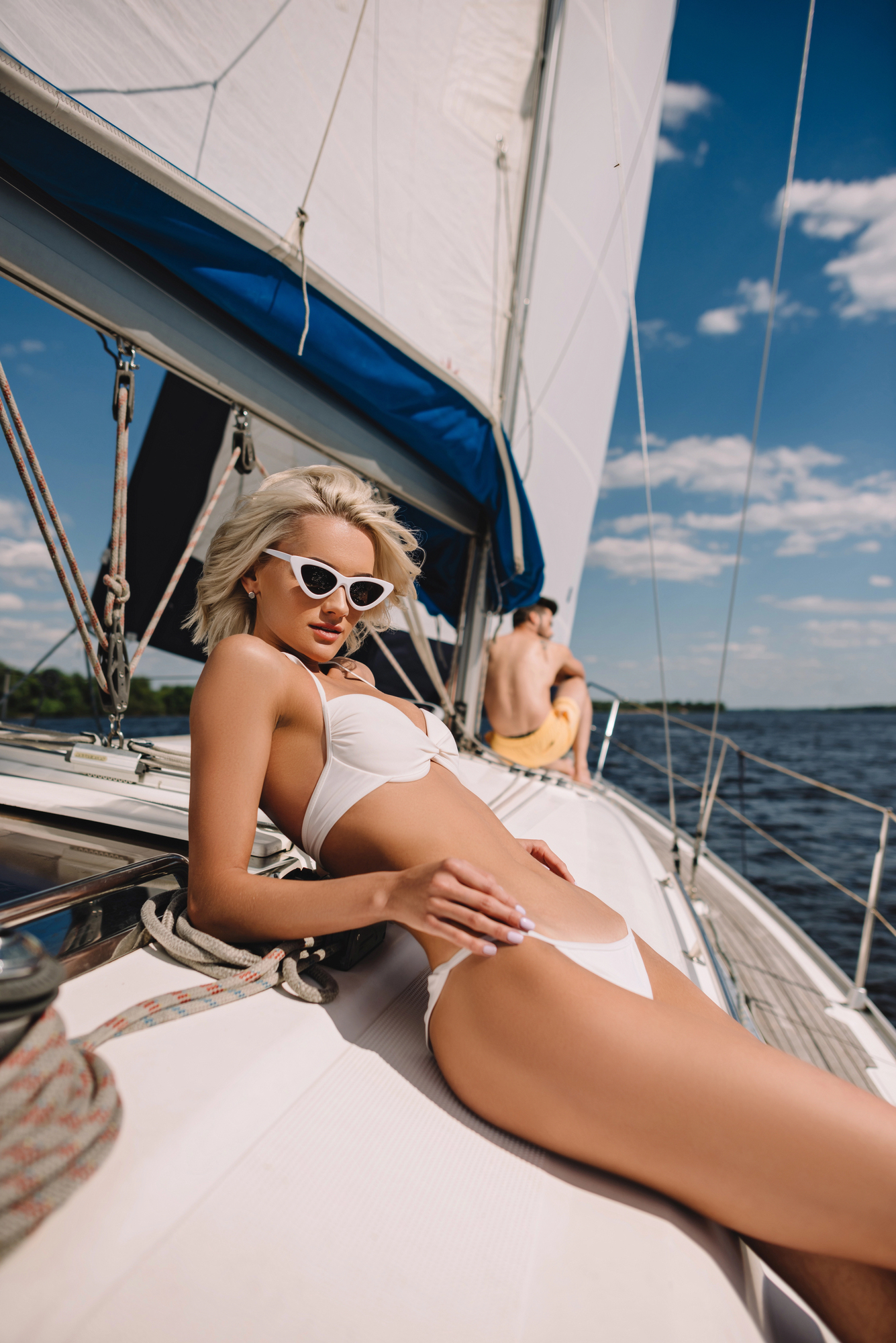
The assumption that sailing yachts lack spacious living areas has been redefined by luxury catamarans. Featuring beam dimensions often exceeding 9 to 11 metres, modern multihulls deliver vast single-level saloons, wide forward cockpits, trampolines, and flybridges comparable in floor area to motor yachts of similar length.
Motion Dynamics and Sea Keeping: Physical comfort underway depends heavily on hull form. Motor yachts fitted with zero-speed fin or gyroscopic stabilizers provide a stable platform in calm-to-moderate seas, although they can experience quick rolling motions in beam seas or pitching in heavy head swells. Monohull sailing yachts naturally heel under wind pressure—an exhilarating dynamic for sailing enthusiasts, but one that requires secure footing and careful placement of glassware while underway. Sailing catamarans generally heel less than monohulls, although they can still pitch, roll or move abruptly in waves.
Speed and Cruising Flexibility
Cruising speed fundamentally determines your geographic range during a one- or two-week itinerary.
Covering Distances on a Motor Yacht: For itineraries requiring passage between distant coastal destinations on fixed calendar schedules, motor yachts offer distinct advantages. Some faster motor yachts can cover a 50-nautical-mile passage in a few hours, but actual transit time and comfort depend on the yacht, sea state and safe operating speed. This allows charterers to combine distant island groups or coastal highlights within a single week without spending entire days underway.
The Measured Rhythm of Sail: Sailing yacht cruising speeds vary significantly by design, wind and sea conditions. While high-performance racing-cruising sloops achieve higher speeds in brisk winds, passage times are inherently longer. Furthermore, sailing routes are dictated by wind direction: sailing directly upwind requires tacking back and forth across the wind, which increases the actual distance sailed compared to a direct compass line.
A sailing yacht holiday works best when planned around localized cruising grounds—such as the British Virgin Islands, the Ionian Sea, or the sheltered bays of the Balearics—where anchorages are separated by manageable hops of 10 to 20 nautical miles. Attempting an ambitious, high-mileage itinerary on a sailing yacht often results in running the auxiliary engine continuously, detracting from the peaceful nature of travel under sail.
For readers evaluating crewed vessels capable of extensive regional cruising, our guide to luxury yacht charters details the logistical distinctions between regional fleets.
Costs: Which Type Is More Expensive?
A common perception is that sailing yachts are invariably cheaper than motor yachts. While base charter fees for sailing vessels are often lower for a given length overall, total financial expenditure depends on vessel displacement, age, crewing levels, and variable operating expenses.
1. Base Charter Rates and Internal Volume
Foot for foot, sailing yachts frequently command lower base charter rates than motor yachts of identical length. However, comparing vessels purely on length can be misleading: a 35-metre motor yacht encompasses substantially more internal volume, guest cabin space, and crew than a 35-metre sailing sloop. When evaluated on a per-cubic-metre or gross-ton basis, charter rates between pedigree motor and sailing yachts are often comparable.
2. Operational Expenses (The APA)
The most significant budgetary divergence occurs in operational running costs, which are typically funded via the Advance Provisioning Allowance (APA) on plus-expenses charter contracts.
Propulsion fuel can be a major variable. Fuel use on motor yachts can be substantial, but varies greatly with hull design, engine configuration, speed and sea conditions. In contrast, a sailing yacht running under canvas consumes zero propulsion fuel while sailing, though diesel or other energy sources may still be required for auxiliary propulsion and onboard systems.
On plus-expenses charter agreements, motor yacht charterers typically advance an APA amount agreed under the charter contract. The amount varies by yacht, itinerary and expected expenditure on fuel, provisions, berthing and other chargeable items. Ask the broker to explain what is included, how expenditure is accounted for and how any balance is settled.
To understand how operating allowances, statutory taxes, and crew gratuities combine into a total charter budget, consult our detailed breakdown on how much it costs to charter a yacht for a week.
Which Platform Suits Your Party?
The ideal yacht depends on the dynamics of your travelling group, whether you are hosting multi-generational families, planning a secluded couples' getaway, or focusing on active water sports.
Which Is Better for Families?
For families travelling with younger children or older relatives, onboard stability, single-level accessibility, and dedicated recreation spaces are paramount.
Motor yachts offer enclosed air-conditioned saloons, substantial bulwarks (side railings), secure walk-around decks, and dedicated entertainment dens where younger guests can relax out of the sun. Hydraulic swim platforms provide safe, stair-free access into the sea for swimming.
However, luxury sailing catamarans are equally popular family platforms. Their wide trampolines provide unique lounging areas, they do not heel underway, and their shallow drafts allow access to calm, sheltered beaches. Monohull sailing yachts offer an engaging learning environment for older children who enjoy hands-on sailing, but steep companionway stairs and heeling under sail require closer supervision with toddlers.
Which Is Better for Couples?
For couples seeking an intimate escape, honeymoon voyage, or anniversary celebration, the atmosphere of a luxury sailing yacht is compelling.
Gliding quietly through sheltered anchorages under canvas, dropping anchor in quiet coves away from busy port promenades, and stargazing from unencumbered teak foredecks create an authentic romantic setting.
Conversely, a motor yacht provides spacious, hotel-suite amenities: full-beam master staterooms with private balconies, on-deck hot tubs, and larger interior hospitality crews. The decision rests between the quiet charm of windward voyaging and the spacious luxury of a floating villa.
Water Sports and Active Adventure
If your charter focuses on active water sports—including personal watercraft, wakeboarding, seabobs, and offshore scuba diving—motor yachts generally offer superior carrying capacity. Their high-capacity deck cranes, transom garages, and hydraulic platforms accommodate larger chase tenders and extensive gear inventories.
However, if your definition of adventure involves technical sailing, active helm participation, trimming sails in fifteen knots of breeze, or exploring shallow coral coves aboard a catamaran, a sailing yacht provides a participatory experience that mechanical cruising cannot replicate.
Motor Yacht vs Sailing Yacht for Ownership
For prospective yacht buyers, the choice between motor and sail carries distinct ongoing operational, technical, and financial obligations.
Acquiring a yacht should be viewed primarily as an investment in lifestyle rather than a capital-appreciating financial asset. Running expenses differ considerably between the two platform types:
1. Machinery & Rigging Maintenance
Motor yachts rely on high-horsepower main engines, multi-generator setups, complex hydraulic steering and stabilizing systems, and sophisticated air-conditioning chillers. Periodic fluid diagnostics, regular mechanical servicing, and scheduled engine overhauls represent significant ongoing expenditures.
Sailing yachts feature smaller auxiliary engines with lower mechanical running costs. However, they introduce specialized standing and running rigging, spars, furling hydraulics, and extensive sail wardrobes. Modern composite and laminate sails degrade under continuous ultraviolet exposure and heavy working loads, requiring inspection, recutting, or replacement every few seasons.
2. Berthing, Crewing & Market Liquidity
Marina Berthing: Berthing tariffs are calculated on length overall and beam width. Many monohull sailing yachts fit conventional berths, while sailing catamarans—with their wide beams—may face different berth availability or charges in high-demand Mediterranean and Caribbean harbours.
Crew Qualifications: Sailing yachts require a captain and deck crew holding specialized commercial sailing endorsements (such as RYA Yachtmaster Ocean or equivalent commercial tickets), while large motor yachts demand licensed marine engineers capable of managing complex mechanical, electrical, and hotel automation systems.
Brokerage Liquidity: The secondary market for motor yachts is historically larger by transaction volume, providing broader buyer interest. However, high-pedigree sailing yachts from respected shipyards command dedicated enthusiast followings and may attract specialist buyers; resale value depends on condition, specification, market demand and many other factors.
Before committing to an acquisition, review our cornerstone guides detailing how to buy a yacht and the recurring financial commitments explored in our comprehensive ownership guide.
Environmental Considerations: Sailing vs Motor
As environmental standards tighten across sensitive cruising grounds, ecological footprint is an increasingly relevant factor for charterers and prospective purchasers.
The Propulsion Advantage of Sail: Under canvas, a sailing yacht harnesses renewable wind energy, generating minimal direct carbon emissions or underwater acoustic disturbance while voyaging between anchorages. This significantly reduces propulsion fuel burn compared to a motor yacht covering identical distances.
Hotel Electrical Loads & Generators: However, overall environmental impact involves more than propulsion alone. Modern luxury sailing yachts require auxiliary diesel generators operating at anchor to support chilled-water air conditioning, refrigeration, freshwater desalination, and navigation electronics. Modern hybrid power systems, solar array integration on catamarans, and high-capacity lithium battery banks increasingly allow sailing yachts to enjoy extended silent periods at anchor without generator emissions.
Motor Yacht Technological Innovations: The motor yacht sector is adopting hybrid diesel-electric propulsion, selective catalytic reduction (SCR) exhaust scrubbers complying with strict IMO Tier III emissions limits, and optimized displacement hull forms that reduce hydrodynamic drag. Nevertheless, when operated actively under canvas in favourable weather, a sailing yacht generally delivers a lower operating carbon footprint during passage-making.
How to Make the Right Choice
Use this practical evaluation checklist to clarify which platform matches your travelling group before consulting a suitably qualified charter broker.
Choose a Luxury Motor Yacht If:
Choose a Luxury Sailing Yacht If:
The Final Verdict
Ultimately, neither a motor yacht nor a sailing yacht is universally superior; the right vessel is the one that aligns with your personality, your guests, and your cruising grounds.
If your vision of an exceptional marine holiday is defined by efficiency, multi-deck volume, expansive amenities, and the speed to explore broad coastlines on a firm schedule, a luxury motor yacht is the logical choice. It functions as a luxurious private floating base where transitions between ports are fast and predictable.
If, however, you value the romance of seafaring, quieter cruising under canvas, and the unhurried rhythm of wind-driven navigation, a luxury sailing yacht delivers a rewarding maritime connection that motor cruising cannot replicate. And for those seeking a balanced compromise—generous living space and level stability paired with sailing capability—a modern luxury sailing catamaran represents an attractive middle ground.
Before making your commitment, consulting a suitably qualified charter broker will help you assess candidate yachts against your destination, party size, and seasonal weather patterns.
Frequently Asked Questions
Clear, independent answers to common questions about choosing between motor and sailing yachts.
Is a motor yacht or a sailing yacht better for first-time charterers?
For first-time charterers who are unsure of their sea legs, a luxury motor yacht or a sailing catamaran is often the most comfortable entry point. Some motor yachts and sailing catamarans offer comparatively upright cruising and generous guest space, but motion, accessibility and facilities vary by vessel and conditions. Monohull sailing yachts are wonderful for first-timers who actively want to experience the romance of sailing, but guests should be prepared for the vessel heeling (leaning) under wind.
Are sailing yacht charters significantly cheaper than motor yachts?
Foot for foot, sailing yachts often carry lower base charter rates than motor yachts of identical length. However, motor yachts contain substantially more internal volume and cabin space for that same length. Furthermore, sailing yachts incur lower fuel expenses while underway, which reduces end-of-charter Advance Provisioning Allowance (APA) spending. Total holiday costs vary widely, so compare actual yacht quotations and anticipated expenses rather than assuming one category will always cost less.
Do sailing yachts have air conditioning and luxury amenities?
Many modern luxury sailing yachts and catamarans offer air conditioning, en-suite cabins, communications and well-equipped galleys. Equipment differs between vessels, so check the specification. Generators, batteries or shore power may support onboard systems, and generator noise varies.
Can a motor yacht access the same shallow anchorages as a catamaran?
Not always. Sailing and power catamarans typically carry shallow drafts (often between 1.2 and 1.8 metres), allowing them to navigate shallow sandbars and anchor close to beaches in destinations like the Bahamas or the Greek islands. Motor yachts, particularly larger displacement hulls, carry deeper drafts (often 2.2 to 3.5+ metres) and must anchor further out in deeper roadsteads, using tenders to ferry guests ashore.
What happens if there is no wind during a sailing charter?
Most modern luxury sailing yachts have auxiliary propulsion, commonly a diesel engine. If the wind drops or blows from an unfavourable direction on a day when you need to reach a specific harbour, the captain engages the engine to motor comfortably to your destination at a speed appropriate to the yacht and prevailing conditions.
Which yacht type is more seaworthy in rough weather?
Seaworthiness depends on the individual vessel’s design, construction, condition, loading and intended operating limits, as well as weather and crew judgement. Many sailing monohulls use ballast and hull shape to generate righting stability, while some motor yachts use stabilisation systems to reduce rolling. Neither design is immune to dangerous conditions, and a captain may change or cancel a passage for safety.
Do charter guests have to work on a sailing yacht?
Not on a crewed charter. Fully crewed luxury sailing charters include a licensed captain and professional deck crew who handle all line-handling, sail trimming, and navigation. Guests are welcome to take the helm under the captain's guidance if they wish, but they are equally entitled to relax on deck while the crew manages the vessel.
Find the Yacht That Matches Your Vision
Whether you choose the speed and volume of a luxury motor yacht or the graceful silence of a sailing vessel, a suitably qualified broker can help you evaluate the options and understand contractual terms. Learn how to select a suitably qualified charter broker to inspect fleets, negotiate terms, and curate your voyage.
Charter A Yacht is an independent digital information and research website operated by Media Kynect Ltd, a digital publishing company registered in the United Kingdom.
We are not a yacht brokerage, charter operator, yacht dealer, vessel owner, charter agent, legal adviser, or financial adviser. We do not own, manage, or operate yachts, confirm live charter availability, negotiate sales or charters, hold client funds, or act as a party to charter or purchase agreements.
The information published across this website is provided for general informational and educational purposes only. Vessel specifications, operating fuel consumption, charter rates, taxes, insurance requirements, and contractual terms vary significantly between individual yachts, cruising grounds, and management companies.
Before executing contracts or transferring funds, readers should independently verify all vessel details, safety certifications, operational costs, and contract terms with an appropriately qualified independent yacht broker, surveyor, or maritime legal professional.