Turkey Yacht Charter: Luxury Yachts, Gulets & the Turquoise Coast
Explore Turkey from the water, where pine-clad mountains tumble into translucent Aegean bays and ancient ruins border modern marinas. An independent editorial guide to luxury motor yachts, handcrafted gulets, bareboat sailing, and realistic passage planning across the Turquoise Coast.
Where Classical Antiquity Meets Sheltered Mediterranean Basins
Stretching from the jagged peninsulas of the southern Aegean to the soaring cliffs of the Lycian shore, Turkey’s south-western coastline represents one of the Mediterranean’s premier cruising grounds.
An independent Turkey yacht charter delivers an experience fundamentally distinct from western European waters. Known colloquially as the Turquoise Coast, this region is celebrated for the historic "Blue Cruise" (Mavi Yolculuk), a seafaring tradition pioneered by Turkish intellectuals who chartered traditional wooden sponge boats to explore untouched coastal coves. Today, that heritage has evolved into a sophisticated maritime sector supported by world-class marinas, dedicated refit yards, and an expansive fleet ranging from traditional handcrafted gulets to contemporary high-performance motor yachts and sailing catamarans.
What makes a yacht charter in Turkey extraordinary is the sheer density of sheltered anchorages. Unlike the open, swell-exposed roadsteads found in certain island chains, Turkey’s indented shoreline features deep gulfs, pine-fringed bays with lines secured to designated shore mooring points or bollards, and submerged Lycian ruins visible through crystalline water. Navigating these waters requires an appreciation of local coastal winds, marina infrastructure, and whether your voyage is better suited to an independent bareboat venture or a fully crewed charter.
Travellers comparing Mediterranean cruising destinations may also wish to explore our independent guide to Croatia yacht charters, where Adriatic island-hopping offers a different experience from Turkey's sheltered gulfs and traditional gulet cruising. For a broader overview, browse our global destinations directory or consult our guide to private yacht charter.
Cruising Diversity: Gulets, Monohulls & Motor Yachts
Turkey's charter fleet is uniquely dual-faceted. Alongside high-speed modern motor yachts and production sailing catamarans lies the indigenous Turkish gulet—a broad-beamed, handcrafted wooden motorsailer designed specifically for spacious coastal entertaining and sheltered cove mooring.
Types of Yacht Charters Available in Turkey
Charter configurations along the Turkish Riviera reflect regional maritime traditions, protected gulf conditions, and varied visitor preferences.
| Charter Format | Typical Purpose & Duration | Crew & Operational Structure | Key Questions to Ask |
|---|---|---|---|
| Traditional Turkish Gulets | 7 to 14 days exploring sheltered gulfs (Bodrum, Göcek, Fethiye, Marmaris) | Dedicated crew (Captain, Chef, Deckhand/Steward) managing navigation, mooring, and all meals | Is air conditioning available 24/7 or restricted to generator hours? Are fuel and port fees inclusive? Does the vessel hoist sails regularly? |
| Luxury Crewed Motor Yachts | Multi-day term cruising, fast coastal hops, and executive entertaining | Professional maritime crew scaled to vessel requirements (Captain, Engineer, Chef, Stewards) | What is the Advance Provisioning Allowance (APA)? What are the fuel consumption rates at cruising speed? Can the yacht clear customs for Greek island hops? |
| Crewed & Bareboat Catamarans | Family holidays, shallow bay anchoring, and multi-cabin leisure cruising | Bareboat (charterer-skippered subject to certification) or hired professional skipper/hostess | What security deposit and cruising transit log fees apply? Is a tender outboard engine included? What are the water-maker capacities? |
| Monohull Sailing Yachts | Traditional sailing charters, coastal exploration, and sailing school flotillas | Self-directed bareboat or captained charter | What is the vessel's draft for shallow coastal jetties? Are holding tanks compliant with Turkish Blue Card wastewater monitoring? |
| Private Day Charters | 4 to 8 hours focused on bay swimming, secluded cove dining, and scenic sunset cruising | Local licensed captain and crew | Are fuel, lunch, non-alcoholic beverages, and watersports gear bundled into the day rate? |
Traditional Turkish Gulets
Handcrafted primarily from pine, mahogany, and teak in shipyards across Bodrum and Bozburun, gulets range from classic 20-metre vessels to 50-metre luxury motorsailers. Featuring broad aft decks with shaded dining tables and wide sun pads, they are configured for relaxed cove-hopping and culinary hospitality.
Luxury Motor Yachts
Planing and semi-displacement motor yachts offer the speed required to bridge larger coastal passages, allowing charterers to cruise from Bodrum to Göcek within a single day. Equipped with stabilizers, hydraulic swim platforms, and tender garages, they provide high-end resort living underway. Travellers comparing luxury motor yacht destinations can also explore our French Riviera yacht charter guide, covering a contrasting western Mediterranean experience centred on glamorous ports and established superyacht destinations.
Sailing & Power Catamarans
Multihulls have become exceptionally popular in Turkish waters, particularly around the sheltered islands of Göcek and Fethiye. Their wide beams offer stable platforms at anchor, while their shallow drafts enable vessels to approach closer to coastal beaches and shallow bays.
Bareboat Sailing Yachts
Modern production monohulls (38–54 feet) cater to qualified independent sailors seeking the afternoon thermal winds of the Aegean. Major charter fleets based in Marmaris, Göcek, and Fethiye provide well-equipped bareboat vessels for self-sufficient coastal exploration.
Charter Rules, Qualifications and Practical Considerations in Turkey
Chartering a vessel in Turkish territorial waters falls under the jurisdiction of the Turkish Ministry of Transport and Infrastructure, the Ministry of Culture and Tourism, and regional port authorities. Operating protocols differ significantly between bareboat and crewed charters.
1. Bareboat Skipper Qualifications & Operator Vetting
To charter a bareboat sailing yacht or catamaran without a professional captain, charter operators and port authorities require verified proof of sailing competence. Accepted credentials commonly include the International Certificate of Competence (ICC), RYA Day Skipper (Practical) or higher, or equivalent national sailing licences. In addition to documentary certification, operators typically evaluate an itemised sailing resume detailing previous skipper experience on vessels of comparable size. If qualifications are considered insufficient, operators will require a professional local skipper for part or all of the charter.
2. Transit Log & Cruising Documentation
Depending on the vessel's registration, operating status and intended itinerary, Turkish cruising documentation may include a Transit Log or other applicable port-clearance records. The charter operator should confirm which documents are required and arrange any necessary formalities before departure. Where applicable, cruising documentation formalises the yacht’s registration, commercial charter permissions, insurance coverage, crew credentials, and passenger manifest. Any subsequent change in crew or passenger headcount during the voyage may require formal notification, manifest updates, or administrative reissue through local port authorities depending on vessel status. Charterers should verify with their provider how cruising administration and port clearance fees are handled for their specific vessel and route.
3. Wastewater Management & Blue Card Environmental Systems
Turkey enforces environmental legislation to safeguard its coastal waters. In key cruising areas along the Aegean and Mediterranean coastlines, vessels operate under the Blue Card (Mavi Kart) environmental monitoring system or regional waste-tracking frameworks, which require wastewater to be retained in certified holding tanks. Discharge into the sea within designated bays and coastal zones is prohibited. Where applicable, vessels log wastewater pump-outs at municipal or marina stations, with spot inspections conducted by regional maritime authorities. Charterers should confirm the vessel's specific waste-handling procedures and applicable local environmental regulations before departure.
4. International Border Formalities: Greek Island Itineraries
Because south-western Turkey lies directly adjacent to the Greek Dodecanese islands (such as Kos, Symi, and Rhodes), charterers frequently inquire about combining Turkish and Greek waters. While dual-nation itineraries are technically possible, they require crossing an international maritime frontier and entering Schengen customs territory. This entails:
- Commercial Charter Authorisation: The specific yacht must be legally certified, flagged, and commercially permitted to conduct charter activity across both Turkish and Greek maritime jurisdictions. Not all local Turkish-flagged vessels hold Greek commercial cruising permissions.
- Customs & Immigration Clearance: The vessel must formally exit Turkey through an official port of entry (such as Bodrum, Marmaris, or Datça) and enter Greece through a designated port of entry (such as Kos, Symi, or Rhodes) for passport inspection, crew verification, and payment of Greek port dues. The reverse protocol applies upon return.
- Administrative Fees & Agent Costs: Port clearance handling, customs agency fees, and bilateral cruising tariffs add financial overhead and consume cruising time. Most charterers find dedicating a one-week charter entirely to Turkish waters more rewarding and unhurried.
Turkey’s Principal Yacht Charter Destinations
The south-western Turkish coastline offers distinct cruising realms, spanning high-glamour Aegean peninsulas, protected pine-fringed gulfs, and rugged Lycian cliffscapes.
Bodrum Yacht Charter: Historic Gulet Capital & Glamour
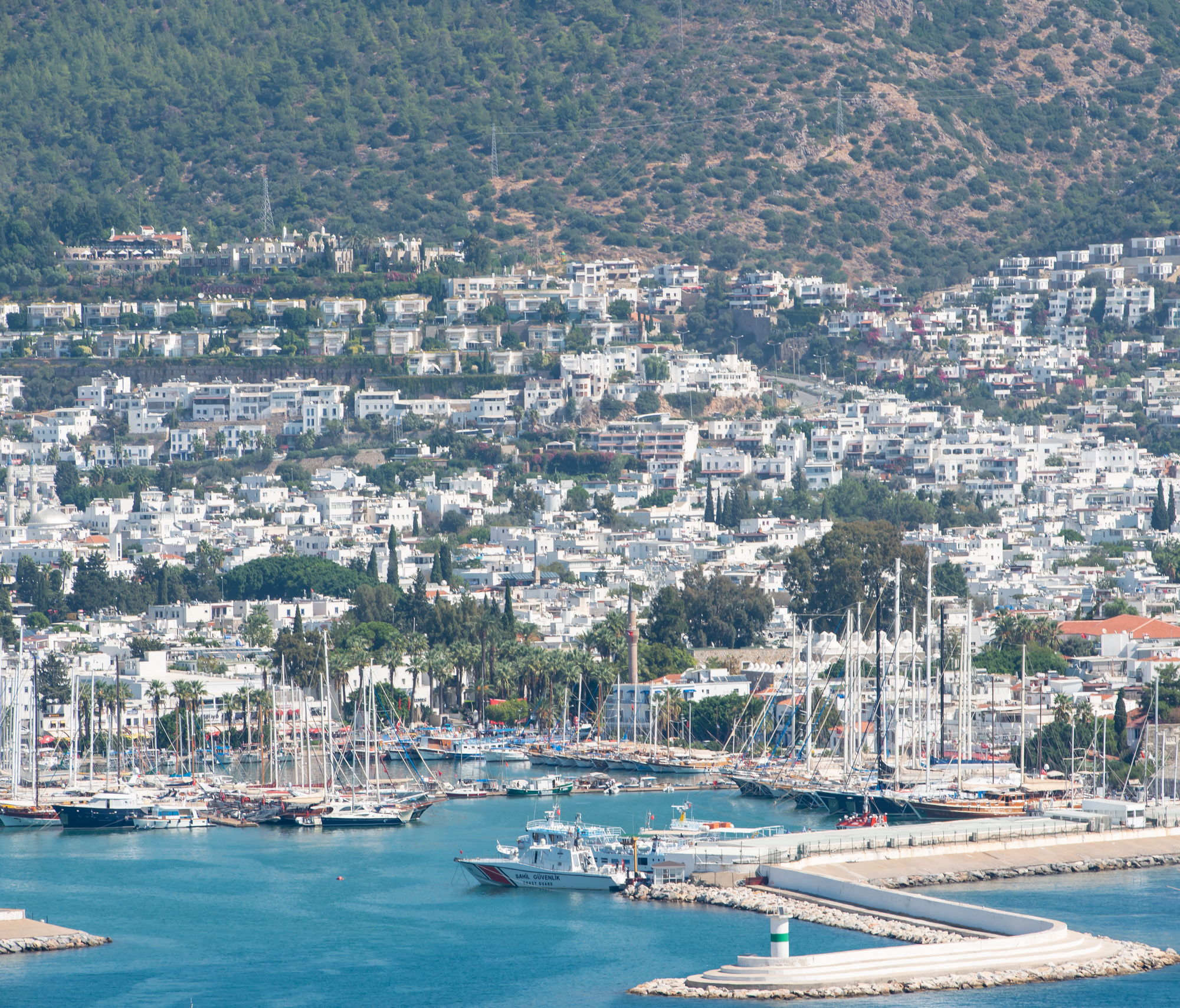
Widely recognized as the spiritual birthplace of the Blue Cruise and Turkey's premier superyacht hub, Bodrum combines ancient history with modern maritime luxury. Dominated by the 15th-century Castle of St Peter (home to the Museum of Underwater Archaeology), the town features historic inner-harbour quays where traditional gulets berth stern-to beside vibrant waterfront bistros.
To the north, the Bodrum Peninsula boasts ultra-luxury developments including Yalıkavak Marina, a flagship superyacht destination hosting designer boutiques and international dining establishments. Departing south from Bodrum leads into the protected, pine-covered waters of the Gulf of Gökova—a pristine cruising basin bordered by steep mountains, natural anchorages like Orak Island and Cleopatra Island (Sedir), and clear water ideal for swimming and windward sailing.
Marmaris Yacht Charter
Nestled inside an expansive, mountainous natural bay, Marmaris is one of the eastern Mediterranean's largest yachting centres. With comprehensive marina facilities like Netsel Marina, it serves as a primary staging hub for bareboat fleets, luxury gulets, and long-range cruisers. Charters heading west explore the rugged, indented shores of the Bozburun Peninsula, while eastward passages lead toward the Dalyan delta and the ancient rock tombs of Kaunos.
Göcek Yacht Charter
Situated at the head of the Gulf of Fethiye, Göcek (often spelled Gocek) is widely regarded by experienced sailors as Turkey’s most refined sailing sanctuary. Completely sheltered from heavy Aegean swells and surrounded by pine-carpeted hills, Göcek offers an established cluster of world-class marina facilities and immediate access to the celebrated "Twelve Islands." Here, yachts anchor in tranquil coves such as Wall Bay (Cleopatra’s Baths), Boynuzbükü, and Bedri Rahmi Bay, taking stern lines to approved shore mooring bollards where provided.
Fethiye Yacht Charter
Occupying a broad natural harbour opposite Göcek, Fethiye blends authentic Turkish town life with immediate access to archaeological wonders. Backed by the towering Lycian rock tombs of Amyntas, Fethiye is a favoured starting point for gulet cruises heading south toward the famous blue lagoon of Ölüdeniz, Butterfly Valley, and the historic ruins of Gemiler Island (St Nicholas Island), where Byzantine church foundations slope straight into the sea.
The Datça Peninsula & Knidos
Separating the Gulf of Gökova to the north from the Gulf of Hisarönü to the south, the slender Datça Peninsula offers an unhurried, windswept cruising experience. Characterised by traditional stone villages, almond groves, and deserted coves, the peninsula terminates at Cape Krio, where the ancient Doric city of Knidos overlooks dual harbours that have welcomed sailors for over two millennia.
Kaş, Kalkan & Kekova
Cruising east from Fethiye toward the Lycian coast leads to the bohemian harbour of Kaş, the steep hillside terraces of Kalkan, and the enclosed sound of Kekova. Here, yachts cruise gently over the submerged foundations of the Sunken City of Simena and drop anchor beneath the Crusader fortress of Kaleköy, where ancient sarcophagi emerge from clear turquoise shallows.
Gulf of Hisarönü & Bozburun
Lying between the Datça Peninsula and Marmaris, the Gulf of Hisarönü offers spectacular natural scenery, protected anchorages, and steady afternoon sailing breezes. The fishing village of Bozburun remains the centre of traditional wooden gulet construction, providing a tranquil haven surrounded by arid mountains and crystalline waters.
Turkey’s Principal Marina Hubs & Embarkation Ports
Where you embark shapes your initial cruising itinerary, airport transfer duration, and access to provisioning facilities.
Bodrum Marinas
Served by Milas-Bodrum Airport (BJV, approx. 35–45 minutes road transfer). Key facilities include Milta Bodrum Marina in the town centre (direct access to the old harbour) and Yalıkavak Marina on the northern peninsula (custom-built for mega- and superyachts).
Marmaris Netsel Marina
Served by Dalaman Airport (DLM, approx. 75–90 minutes road transfer). Netsel Marmaris Marina is an expansive, full-service facility hosting major international bareboat fleets, yacht provisioning agents, and technical refit yards inside a fully sheltered natural bay.
Göcek Marina Cluster
Conveniently situated just 20–25 minutes from Dalaman Airport (DLM). Göcek hosts multiple world-class facilities, including D-Marin Göcek, Skopea Marina, and Club Marina, offering immediate departure into the Twelve Islands without open-sea transits.
Fethiye Marinas
Located roughly 45–60 minutes from Dalaman Airport (DLM). Key departure points include Ece Marina and Yacht Classic Marina, offering modern pontoon berths, fuel docks, and immediate provisioning access to Fethiye’s municipal fish and fruit markets.
Turkey Yacht Charter Costs Explained
Charter pricing along the Turkish Riviera reflects vessel category, build year, hull length, crew complement, and whether the arrangement operates under an inclusive gulet structure or an expense-based yacht contract.
To evaluate quotations accurately, distinguish between the advertised base charter fee and total expected expenditure:
1. Base Charter Fee
The base rate covers the hire of the yacht for the agreed period, standard safety equipment, and vessel insurance. On crewed gulets and luxury motor yachts, captain and crew wages are commonly included in the base fee, whereas on bareboat charters, the rate covers the bare vessel only. Base rates fluctuate significantly between shoulder months (May and October) and peak midsummer (July and August).
2. Gulet Charter Cost Structures: Full Board vs. Expenses
Gulet charters in Turkey often operate under distinct culinary arrangements. Some operators quote a base vessel hire and offer separate full board meal packages (covering breakfast, lunch, afternoon tea, and dinner prepared on board by the private chef). Alternatively, guests can opt for self-provisioning or custom preference provisioning, where the crew purchases provisions according to guest requests and presents receipts. Clarify whether beverages (alcoholic and soft drinks) are included, billed on consumption, or permitted on a bring-your-own (BYOB) basis with no corkage fee.
3. Fuel Inclusions & Generator Running Hours
On traditional gulet charters, fuel allowances depend on the specific contract. Some charter agreements bundle propulsion fuel for an agreed daily cruising average, while others bill fuel on consumption. Air conditioning runtime also varies by vessel: continuous 24/7 air conditioning requires generator operation and may be offered on select deluxe or VIP-class vessels, but many gulets operate air conditioning on a scheduled daily allowance or restrict generator hours while at anchor to maintain tranquility. Clarify all fuel and air conditioning inclusions in writing prior to booking.
4. The Advance Provisioning Allowance (APA)
On luxury motor yachts, modern superyachts, and certain high-end multihulls, operating expenses are funded separately via an Advance Provisioning Allowance (APA). The APA is an operating deposit managed directly by the captain to cover variable costs such as propulsion fuel, generator fuel, marina berthing dues, food and beverage provisioning, and canal or transit dues. The captain maintains an itemised record of expenses with receipts available for review during the charter. At the conclusion of the charter, any unused APA funds are reconciled and refunded in accordance with the charter agreement, while any expenses exceeding the initial deposit are settled prior to disembarkation.
5. Harbour Fees, Municipal Dues & Taxes
Charters embarking in Turkey include standard municipal departure harbour dues in their base contract. However, private marina berths (such as Yalıkavak, D-Marin Göcek, or Netsel Marmaris) incur daily dockage charges if guests choose to spend nights berthed in a marina rather than anchoring in natural coves. Transactions are subject to applicable Turkish Value Added Tax (KDV), which varies depending on the vessel’s flag, commercial registration, and contract terms.
6. Crew Gratuities
In Mediterranean yachting, crew gratuity is discretionary and customary for attentive, professional service. Tipping expectations vary depending on the vessel class, service level, and charter structure. Gratuities are handed directly to the captain at the conclusion of the voyage for fair distribution among all crew members (including deckhands and galley staff). Visitors should clarify customary local expectations with their charter provider before departure.
What to Request in an Itemised Turkey Yacht Charter Quote
To ensure transparent comparison between external charter operators, request a written, line-by-line quotation confirming:
For a comprehensive international perspective on how operating expenses and contracts are structured on larger vessels, consult our detailed analysis on how much it costs to charter a yacht for a week.
Best Time to Charter a Yacht in Turkey
Turkey enjoys an exceptionally long Mediterranean sailing season extending from late April through October, benefiting from high sunshine hours, sheltered gulf topography, and reliable thermal sea breezes.
| Season | Months | Weather & Maritime Profile | Cruising Dynamics |
|---|---|---|---|
| Spring Shoulder | May to June | Warm, sunny days, mild evenings, and refreshing sea temperatures warming gradually. Moderate breezes with minimal rain risk. | A favoured window for peaceful cruising; lush green hillsides, uncrowded anchorages in Göcek and Gökova, and pleasant temperatures for touring classical ruins ashore. |
| Peak Summer | July to August | Hot, dry Mediterranean summer conditions (30°C–38°C), long daylight hours, and the highest sea temperatures of the year (26°C–28°C). | Height of shoreside energy, beach clubs, and vibrant waterfront dining. High demand for premier marina berths; active Meltemi winds across open Aegean channels. |
| Autumn Shoulder | September to October | Balmy air temperatures (24°C–29°C), comfortably warm sea water retained from summer, and easing wind patterns. | Widely considered by experienced charterers as the finest cruising window; golden light, uncrowded coves, and relaxed dining in coastal fishing villages. |
| Winter Period | November to April | Cooler temperatures, variable weather systems, and periodic rainfall with occasional strong coastal depressions. | Commercial charter availability is limited. Most charter fleets and gulets undergo scheduled shipyard maintenance, refit work, or winter haul-out. |
Captain's Navigational Note on the Meltemi: During midsummer (particularly July and August), the Aegean basin is influenced by the Meltemi—a dry northerly to north-westerly wind. While open passages around the Bodrum Peninsula and the Datça headland can experience brisk wind and choppy seas, interior gulfs like Gökova, Hisarönü, and Fethiye remain largely protected, providing calm waters for overnight anchoring. Qualified captains adapt passage plans daily to ensure passenger comfort.
Practical Checklist for Planning Your Turkey Yacht Charter
Chartering along the Turquoise Coast requires thoughtful coordination. Follow these three core pillars to ensure an unhurried, legally compliant voyage.
Choose the Right Region & Vessel
Align your group's preferences with local geography: choose a handcrafted gulet or catamaran for relaxed cove-hopping in Göcek and Gökova, a performance monohull for spirited bareboat sailing from Marmaris, or a luxury motor yacht for rapid cruising between Bodrum and Greek-border waters.
Verify Charter Terms & Qualifications
For bareboat charters, confirm operator acceptance of your ICC or national sailing licence and review security deposit terms. For crewed charters, verify the vessel's official commercial charter registration, passenger capacity limit, and written cancellation/rescheduling terms.
Confirm Provisioning & Total Costs
Request a comprehensive, written quotation itemizing base vessel hire, crew services, transit log fees, food and beverage arrangements (full board vs. APA), and generator air conditioning hours to avoid unexpected expenses at the dock.
Which Turkey Yacht Charter Option Fits Your Plans?
Matching your group's profile to the proper vessel category and charter format ensures optimal comfort, safety, and financial value.
Traditional Turkish Gulet Holiday
Ideal for multi-generational families or groups of friends seeking an unhurried "Blue Cruise" experience. With spacious wooden decks, shaded aft dining, and dedicated culinary crew, a gulet provides a relaxed platform for anchoring in quiet pine coves and swimming in clear water.
- Daily air conditioning runtime (restricted generator hours vs. 24/7).
- Full board meal package inclusions, dietary flexibility, and beverage policies.
- Water toys included aboard (kayaks, paddleboards, waterskis).
Family Catamaran or Sailing Holiday
Best suited for families seeking calm waters and water sports. A modern sailing or power catamaran offers wide trampolines, stable swim platforms, and a shallower draft that allows close approach to sheltered anchorages across the Twelve Islands of Göcek.
- Skipper and hostess cabin arrangements if hiring professional crew.
- Tender horsepower and child-sized lifejackets provided aboard.
- Water-maker capacity and solar power autonomy for independent anchoring.
Fully Crewed Luxury Motor Yacht
Configured for executive retreats, milestone celebrations, or fast coastal cruising. A luxury motor yacht provides multi-deck entertaining, formal culinary service, and the cruising speed needed to bridge Bodrum, Marmaris, and Göcek within a week-long itinerary.
- Advance Provisioning Allowance (APA) percentage and expense accounting.
- Estimated fuel burn rates at planned cruising speeds.
- Marina berthing allocations during peak season weeks in Bodrum.
Independent Bareboat Sailing Charter
Designed for experienced sailors seeking independent coastal cruising, rewarding Aegean sailing conditions and the freedom to explore Turkey’s sheltered bays and historic harbours at their own pace. A modern monohull or catamaran departing from Marmaris, Göcek, or Fethiye allows self-directed cruising under reliable afternoon sea breezes.
- Operator approval of your ICC or national skipper certification.
- Turkish Transit Log and Blue Card wastewater pump-out protocols.
- Security deposit amounts, insurance waivers, and turnaround check-in times.
Frequently Asked Questions
Clear, independent answers to common questions about chartering a yacht along Turkey’s Turquoise Coast.
How much does a yacht charter in Turkey cost?
Total costs are structured around base vessel hire, which varies according to the yacht's length overall, shipyard build, build year, and seasonal demand. On crewed gulets, pricing often includes crew services and basic cruising fuel, with food and beverages handled via full board packages or on consumption. On luxury motor yachts, operating expenses are funded via an Advance Provisioning Allowance (APA). Bareboat charters cover the bare vessel only, with fuel, transit log, and cleaning billed separately. Always request a written, itemised quotation before paying a deposit.
What is the difference between a gulet and a luxury yacht?
A traditional Turkish gulet is an indigenous, handcrafted wooden motorsailer featuring a broad beam, rounded stern, and expansive outdoor living spaces configured primarily for coastal cruising and cove-anchoring under engine power (though some modern gulets hoist sails). A contemporary luxury motor yacht is typically built from composite, aluminium, or steel, featuring planing or semi-displacement hulls, high cruising speeds, advanced stabilizers, and modern interior architecture. Both formats offer crewed luxury, but gulets prioritize spacious deck relaxation, while motor yachts emphasize cruising speed and contemporary engineering.
Which is better for yacht charter: Bodrum, Marmaris, Göcek or Fethiye?
Each hub serves different cruising preferences. Bodrum is premier for vibrant nightlife, high-end shopping, superyacht marinas, and cruising the historic Gulf of Gökova. Göcek is unmatched for tranquil, protected island cruising, family catamarans, and short passages between natural pine coves. Marmaris serves as an established bareboat and long-distance cruising centre with access to the wild Bozburun Peninsula. Fethiye combines ancient Lycian rock tombs with convenient access to dramatic southern anchorages like Gemiler Island and Ölüdeniz.
Can I charter a yacht in Turkey without a captain?
Yes, bareboat sailing charters are widely available on production monohulls and catamarans departing from Marmaris, Göcek, and Fethiye. To charter bareboat, operators and port authorities require an accepted skipper licence (such as the International Certificate of Competence / ICC or RYA Day Skipper) and a verifiable sailing resume. Larger motor yachts, superyachts, and traditional Turkish gulets are charterable exclusively with professional crew to satisfy marine insurance policies, passenger safety, and vessel engineering requirements.
When is the best time to charter a yacht in Turkey?
The primary charter season runs from May through October. Peak summer (July and August) delivers hot Mediterranean weather, vibrant shoreside atmosphere, and warm swimming water, accompanied by active Meltemi winds across the Aegean. The shoulder months of June and September are widely preferred by experienced sailors for warm sea temperatures, lower crowd density in premier coves, and pleasant daytime heat. May and October offer uncrowded anchorages and mild weather, though evenings are cooler.
Are Turkish gulet charters all-inclusive?
Not necessarily. While some gulet operators offer inclusive pricing or optional full board packages covering three meals daily and non-alcoholic drinks, terms vary substantially across the fleet. Many luxury gulets operate on a base charter fee plus provisioning expenses, while others permit guests to purchase their own groceries or settle food costs according to audited receipts. Alcoholic beverages are typically billed on consumption or brought aboard by the charterer. Always verify exact food, beverage, fuel, and air conditioning inclusions in writing.
What additional costs should I expect on a Turkey yacht charter?
Depending on your vessel and charter structure, additional expenses may include: Turkish transit log issuance fees, Blue Card wastewater pump-out charges, private marina berthing fees (if electing not to anchor in coves), food and beverage provisioning, excess fuel consumption (for high-speed motoring or extended generator air conditioning hours), applicable Turkish VAT (KDV), watersports equipment fuel, and discretionary crew gratuity.
How far in advance should I book a Turkey yacht charter?
For peak summer dates (July, August, and early September), high-demand gulets and modern catamarans often book six to nine months in advance, particularly for vessels offering specific cabin configurations or modern air conditioning systems. For shoulder season weeks in May, June, or October, booking three to four months ahead generally provides a satisfactory selection of vessels.
Can I charter a yacht in Turkey for a single day?
Yes, private day charters are popular in major tourist hubs such as Bodrum, Göcek, and Marmaris. Day charters typically run for 6 to 8 hours, exploring nearby islands and sheltered bays for swimming and lunch before returning to port in the late afternoon. Day charters are generally offered on an inclusive basis covering basic cruising fuel, lunch, and crew services.
Can a Turkey yacht charter visit the Greek islands?
Cross-border itineraries to nearby Greek Dodecanese islands (such as Kos, Symi, or Rhodes) are possible only if the specific vessel holds legal commercial charter certification for both Turkish and Greek waters. Crossing into Greece involves exiting Turkey through an official port of entry, clearing Greek customs and immigration, paying applicable Greek port tariffs, and completing return border clearance. Because this requires administrative fees, agency handling, and cruising time, many charterers choose to focus exclusively on Turkish waters for a more relaxed one-week voyage.
Explore Turkey Yacht Charter Options with Confidence
Whether you envision an unhurried voyage aboard a traditional wooden gulet through the secluded coves of Göcek, spirited bareboat sailing along the Bozburun Peninsula, or cruising the vibrant waterfront of Bodrum aboard a luxury motor yacht, Turkey offers an extraordinary maritime lifestyle. Use this independent guide to evaluate charter formats, request transparent itemised quotes, and verify provider credentials.