

Yacht Purchase Process: Surveys, Contracts & Sea Trials
Acquiring a luxury yacht involves far more than agreeing a purchase price. A smooth transaction requires structured legal agreements, independent condition surveys, dynamic sea trials, and disciplined closing administration.
The Anatomy of a Yacht Acquisition
In private maritime brokerage, completing a purchase involves coordinating technical, legal, and financial specialists to verify that a yacht's physical condition and ownership records match the agreed terms.
The acquisition usually progresses from identifying requirements and viewing shortlisted vessels to submitting a formal written offer. When commercial terms are agreed, buyer and seller execute a structured sale agreement, and any agreed deposit is deposited into a designated stakeholder account.
The purchase then enters its due diligence phase: out-of-water structural condition surveys, machinery checks, and open-water sea trials. If technical findings are resolved satisfactorily, legal counsel completes title searches, encumbrance checks, and flag-state paperwork before completion funds are released and legal title transfers.
Importantly, the exact sequence, deposit arrangements, rejection thresholds, and legal obligations depend strictly on the signed contract, governing law, and applicable jurisdiction. There is no single universal procedure.
Procedural Discipline vs Commercial Eagerness
"A yacht purchase should be approached with the same legal and technical care as any major corporate asset transaction. Conditional contracts, accredited surveys, and independent title checks help ensure that enthusiasm never overrides practical prudence."
The Yacht Purchase Process at a Glance
An overview of the typical acquisition sequence, highlighting primary activities, key participants, and important points for prospective buyers.
| Stage | Main Activity | Who Is Typically Involved | Important Buyer Consideration |
|---|---|---|---|
| 1. Offer & Negotiation | Submitting written offer; agreeing price, survey conditions, and timeframe. | Buyer, Buyer's Broker, Listing Broker, Seller | Ensure the offer states technical survey contingencies clearly and defines included inventory. |
| 2. Contract Execution | Drafting and signing a structured Sale and Purchase Agreement (e.g. standard MOA). | Buyer, Seller, Maritime Solicitors, Brokers | Confirm that dispute resolution, default terms, and defect cure provisions reflect your expectations. |
| 3. Stakeholder Deposit | Remitting deposit funds into an agreed stakeholder or escrow-type account where applicable. | Buyer, Stakeholder / Escrow Agent | Verbally verify banking coordinates via trusted telephone lines; clarify written release conditions. |
| 4. Technical Surveys | Out-of-water hull inspection, structural acoustic checks, and systems evaluation. | Independent Marine Surveyor, Shipyard Team | Surveyors evaluate accessible components; non-destructive surveys cannot guarantee against hidden faults. |
| 5. Machinery Diagnostics | Engine borescoping, oil fluid sampling, and generator load checks where arranged. | Certified Engine Technicians, Surveyor | Fluid laboratory analyses reveal historical wear patterns, bearing condition, and cooling contamination. |
| 6. Dynamic Sea Trial | Open-water trials testing propulsion temperatures, vibration, steering, and electronics. | Captain, Surveyor, Engine Specialist, Buyer | Sea trials evaluate operating performance under working thermal loads; they do not guarantee future durability. |
| 7. Defect Resolution | Reviewing survey reports; negotiating vendor repairs, price adjustments, or rejection. | Buyer, Brokers, Maritime Counsel, Seller | Rights to reject or request allowances depend strictly on the executed agreement wording and notice deadlines. |
| 8. Title & Registry Audit | Verifying legal title, mortgage discharge, VAT/customs documentation, and liens. | Maritime Solicitor / Attorney, Flag Registry | Title searches and lien clearance requirements vary widely across international jurisdictions. |
| 9. Closing & Handover | Balance disbursement, Bill of Sale delivery, deletion certificate, and delivery protocol. | Buyer, Seller, Counsel, Stakeholder, Flag Agent | Ensure marine insurance takes effect at the exact contractual risk-transfer point before departure. |
*Note on procedural variations: Timelines, deposit percentages, survey protocols, and closing sequences depend on the specific contract forms, vessel scale, flag administration, and governing maritime laws.
Essential Preparations Before Submitting an Offer
Submitting an offer on a luxury yacht represents the formal transition from casual market observation to serious contractual commitment. Before issuing written numbers, buyers should complete several practical groundwork assessments.
1. Operational Mission & Cruising Geometry: Define intended navigation regions, guest capacity, water draft constraints for target anchorages, and whether the vessel will operate under strict private use or commercial charter coding. For an evaluation of customisation versus delivery horizons, review our companion guide: New vs Used Yachts: Which Should You Buy?.
2. Total Lifecycle Cost Modeling: The initial purchase price represents merely the first milestone. Prospective owners must model recurring fixed overheads—including crew payroll, permanent home berth leasing, preventative technical servicing, and insurance—alongside unscheduled contingency liquidity. For a structured financial breakdown, consult: The True Cost of Owning a Luxury Yacht.
3. Assembling Independent Advisory Representation: Rather than relying exclusively on representatives engaged by the vendor, buyers benefit from appointing their own independent team—specifically an independent buyer's broker, an accredited marine surveyor, and a qualified maritime solicitor—prior to executing formal purchase documents.
Making an Offer and Structuring Terms
In the professional yacht brokerage sector, asking prices are established by sellers and their central listing agents to anchor market positioning. Final transaction prices, however, reflect comparative market liquidity, maintenance provenance, and negotiated survey findings.
A formal offer should be submitted in writing through a recognized contract format or structured letter of intent. Key commercial and technical components to define include:
- Offered Purchase Price & Currency: Stating the precise currency of settlement (e.g. EUR, USD, GBP) to mitigate foreign exchange volatility during the due diligence window.
- Deposit Sum & Stakeholder Details: Outlining the intended deposit amount and identifying the agreed stakeholder or escrow agent who will hold client money.
- Technical Due Diligence Conditions: Explicitly stipulating that the offer remains conditional upon the buyer's satisfaction with an out-of-water marine condition survey, mechanical diagnostics, fluid sampling, and dynamic open-water sea trials.
- Defined Inspection & Acceptance Timelines: Establishing specific calendar dates for completing surveys, delivering technical reports, issuing defect notices, and formal vessel acceptance.
- Delivery Location & Physical Inventory: Specifying the agreed physical port of delivery and appending a detailed written inventory confirming all included equipment, tenders, water toys, and loose navigation gear.
Yacht Sale Agreements and Contracts
A formal Sale and Purchase Agreement (SPA) governs the rights, obligations, and risk allocation between buyer and seller throughout the transaction.
While regional brokerage associations provide standardized agreement forms—such as the widely recognized MYBA Memorandum of Agreement (MOA) in European and international transactions, or standard forms issued by the International Yacht Brokers Association (IYBA) or YBAA in North America—terms vary and can be modified through bespoke addenda. Essential clauses requiring independent review include:
1. Contracting Parties & Vessel Specifications
Accurately identifying the legal owner (whether an individual or a corporate Special Purpose Vehicle) and confirming that the signatory holds verified corporate authority or Power of Attorney. The agreement must state the vessel's official registration number, Hull Identification Number (HIN), builder, year, and primary machinery serial numbers.
2. Survey & Sea Trial Mechanics
Defining who bears the operational costs of hauling the yacht, slipway fees, and sea trial fuel. The agreement sets out the precise notification mechanisms for communicating technical defects and defines the parameters under which a buyer may request vendor repairs, negotiate financial allowances, or cancel the agreement.
3. Title Guarantees & Closing Conditions
Setting out the seller's obligations to deliver clear legal title at closing, free of recorded ship mortgages, maritime liens, commercial debts, crew wage claims, and tax encumbrances. The contract specifies which closing documents—such as notarised Bills of Sale, official registry deletion certificates, and protocol of delivery—must be produced before balance funds are released.
4. Governing Law and Dispute Resolution
Specifying which national jurisdiction governs the contract (commonly English law, maritime law of the flag state, or Florida law) and setting out formal dispute resolution procedures, such as international maritime arbitration (e.g. LMAA terms) or court jurisdiction.
Deposits, Stakeholder Accounts and Payment Security
High-value international yacht acquisitions involve substantial fund transfers. Safeguarding deposits and balance completion monies demands verified banking protocols and clear contractual protections.
In many standard brokerage agreements, a deposit (commonly around 10% of the agreed purchase price, though specific sums vary by agreement) is remitted upon contract execution. Critical principles governing payment security include:
- Stakeholder vs. Seller Custody: Deposit funds should never be transferred directly into a private seller's personal bank account prior to closing. Funds are held under an agreed stakeholder or escrow-type arrangement by an established brokerage firm or a licensed maritime law practice bound by written contract rules.
- Contractual Release Conditions: The agreement must state the specific conditions governing deposit release: holding the funds safely during surveys, applying them toward the purchase price at completion, or returning them if contractual survey conditions are not satisfied in accordance with the agreement.
- Verification of Bank Coordinates: Wire fraud and email interception present acute risks in international yachting. Never transfer completion funds or deposits based on emailed wire instructions alone. Always verify banking coordinates verbally via trusted, pre-established telephone numbers with your legal counsel or designated stakeholder before instructing transfers.

Independent Marine Condition Surveys
Engaging an accredited, independent marine surveyor is one of the most critical steps in pre-owned yacht acquisition. The surveyor represents your interests alone, evaluating structural integrity, systems condition, and cosmetic maintenance.
Surveyors belong to recognized professional institutions—such as the Yacht Brokers, Designers and Surveyors Association (YBDSA), the International Institute of Marine Surveying (IIMS), or the Society of Accredited Marine Surveyors (SAMS)—adhering to codified inspection methodologies.
Scope of a Pre-Purchase Condition Survey
A thorough pre-purchase survey encompasses non-destructive evaluation across all accessible compartments and structural components:
- Structural Hull & Bulkheads: Non-destructive moisture scanning, acoustic sounding of composite laminates, checking for delamination or core degradation, and visual audits of stringers, bulkheads, and framing.
- Decks & Superstructure: Assessing teak deck thickness, checking caulking adhesion, identifying sub-surface core soft spots, and inspecting windscreen seals, hatches, and railings for water ingress.
- Auxiliary Engineering Systems: Inspecting chilled-water HVAC plants, watermakers, hydraulic steering, stabilizers, windlasses, and domestic hotel electrical switchboards.
- Plumbing, Through-Hulls & Tankage: Inspecting sea cocks, blackwater treatment systems, freshwater plumbing, bilge pumping arrangements, and fuel transfer manifolds.
- Safety Equipment & Compliance: Auditing fixed fire-suppression systems, life rafts, EPIRBs, flare kits, navigation lighting, and commercial safety coding status where applicable.
Haul-Out Inspections and Specialist Technical Checks
Inspecting a vessel while afloat reveals only half of its physical reality. Hauling the yacht out of the water onto shipyard blocks is standard practice to evaluate underwater running gear and bottom laminate.
The specific scope of haul-out testing depends on hull substrate, vessel displacement, machinery configuration, and surveyor recommendations:
1. Underwater Hull & Running Gear
Once pressure washed, surveyors inspect the bottom for osmosis blistering, grounding damage, or structural cracking. Critical running gear elements—including propeller shafts, cutless bearings, P-brackets, rudders, bow/stern thruster propellers, and trim tabs—are checked for physical wear, play, and alignment tolerances. Sacrificial zinc anodes and grounding straps are audited to assess galvanic corrosion protection.
2. Ultrasonic Plate Thickness Testing (Metal Hulls)
On steel or aluminium displacement yachts, surveyors commonly conduct non-destructive ultrasonic thickness measurements across underwater plate strakes, sea chests, and internal tank boundaries to detect sub-surface plate wastage or electrolytic pitting where deemed necessary.
3. Certified Machinery & Fluid Diagnostics
In addition to the hull surveyor, buyers frequently commission certified engine technicians to conduct diagnostics on main propulsion diesels, transmissions, and generators. Technicians perform internal borescope inspections of cylinder liners, check exhaust elbows, test heat exchangers, and extract lubricant and coolant samples for spectroscopic laboratory fluid analysis to detect premature bearing wear, fuel dilution, or internal glycol leaks.
Dynamic Sea Trials: Testing Under Thermal Load
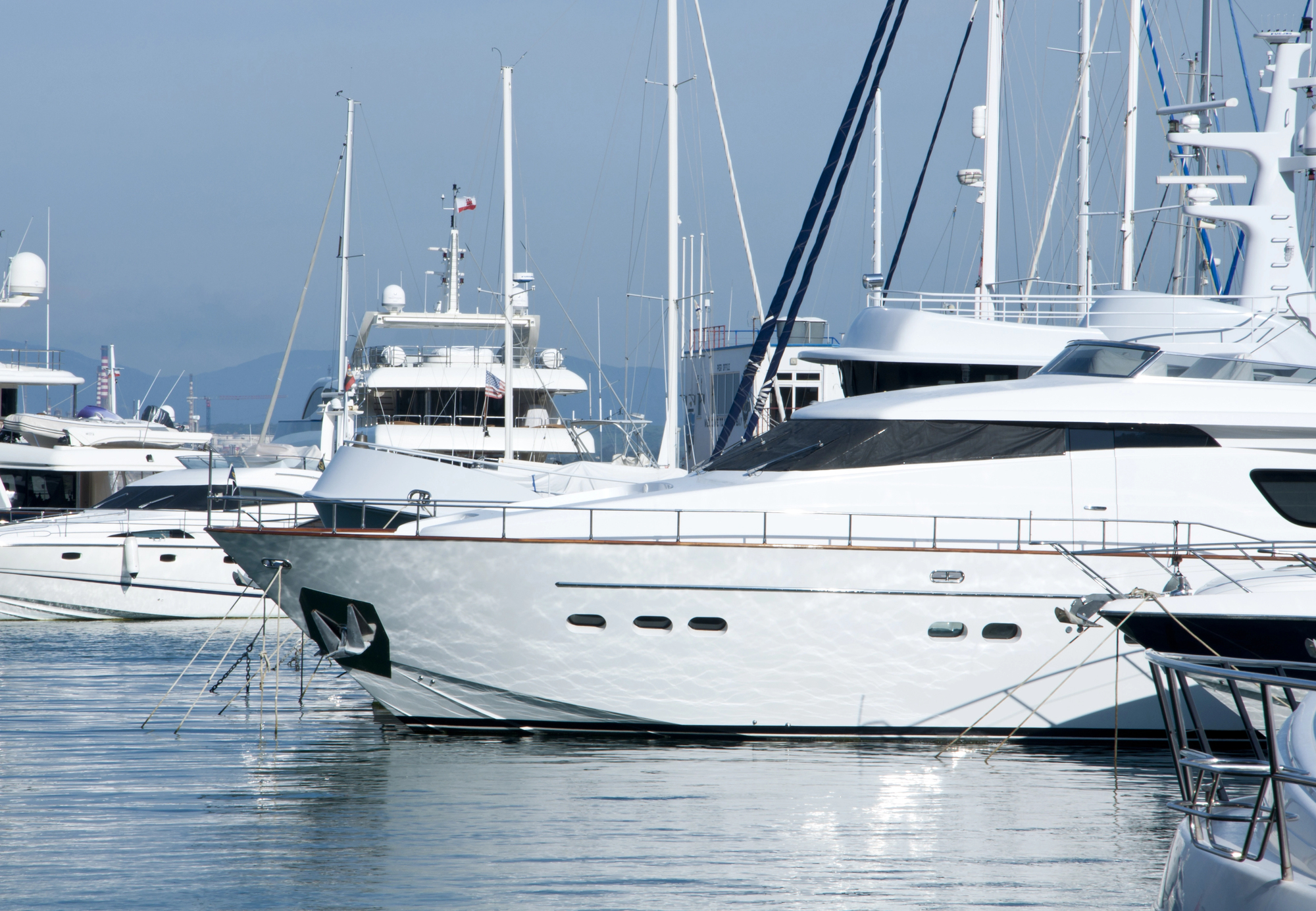
A dynamic sea trial evaluates the yacht's integrated propulsion, navigation, and domestic machinery under authentic operating thermal loads. Dockside visual inspections cannot replicate the pressures experienced while cruising in open water.
The trial scope should be agreed in writing beforehand, detailing duration (often around two to four hours underway as an illustrative guide, depending on vessel scale), intended speed profiles, and which technical specialists will attend.
Key Sea Trial Performance Checks
- Engine Thermal Curves & Pressures: Monitoring coolant temperatures, oil pressures, transmission temperatures, and exhaust gas temperatures across idling, cruising, and wide-open throttle (WOT) RPM curves.
- Vibration & Shaft Alignment: Checking for abnormal shaft vibration, transmission whine, hull resonance, or excessive exhaust smoke across speed ranges.
- Steering & Manoeuvring: Testing emergency helm backups, autopilot integration, bow and stern thruster responsiveness, and anchor windlass recovery.
- Stabilizer Performance: Engaging fin or gyroscopic stabilization systems in open-water swell to verify responsiveness and hydraulic cooling under working load.
- Auxiliary Generator & Electrical Loading: Operating generators under full domestic hotel loads (running air conditioning chillers, galleys, and watermakers simultaneously) to test switchboard transfer without voltage drops.
*Note: Sea state, water temperature, wind velocity, and fuel/water tank loading directly impact trial readings. A sea trial confirms operating status on the day; it does not constitute a forward-looking warranty.
Resolving Technical Survey Findings
Every pre-owned marine survey reveals findings. The critical task is distinguishing routine wear from material structural or safety defects, and understanding contractual options.
Routine Maintenance Items
Cosmetic scratches, aged exterior caulking, worn cabin door latches, or consumables nearing replacement thresholds. These represent expected operational wear on pre-owned vessels and rarely warrant contractual price renegotiation.
Material Technical Concerns
Leaking heat exchangers, bent propeller shafts, failing chiller plant compressors, or degraded cutless bearings. These represent significant repair liabilities that provide valid grounds for negotiating vendor repairs, agreed price adjustments, or escrow retentions where permitted by contract.
Structural & Safety Defects
Active composite delamination, severe hull plate corrosion, cracked bulkheads, non-functional emergency bilge pumps, or failed fire suppression. Where material structural or safety defects affect seaworthiness, the buyer's rights to require vendor repairs, negotiate financial allowances, or reject the vessel depend strictly on the terms of the purchase agreement, applicable law, and compliance with contractual notice deadlines.
Documentation & Title Ambiguities
Unsatisfied historical ship mortgages, missing original VAT receipts, incomplete chains of Bills of Sale, or lapsed classification surveys. These legal encumbrances must be addressed in accordance with agreed closing conditions prior to completion.
Contractual Negotiation Pathways
Once the survey report is issued, the buyer must act within the strict timeframes specified in the contract. Under standard agreements, the buyer typically has four structured avenues:
- Unconditional Technical Acceptance: Accepting the yacht as inspected without requiring repairs or price adjustments.
- Vendor Repair Undertaking: Requiring the seller to rectify identified material defects at the seller's expense prior to completion, subject to re-inspection by the buyer's surveyor.
- Commercial Price Allowance: Negotiating a financial reduction from the purchase price, allowing the buyer to manage rectifications independently following closing.
- Contractual Rejection: Formally rejecting the vessel in accordance with contractual defect clauses. Any entitlement to a deposit refund and the mechanism for releasing funds depend strictly on the signed agreement and stakeholder terms.
Title Verification, Maritime Liens and Ownership Checks
Under international maritime law, certain liabilities attach directly to the vessel itself rather than to its registered owner. Verifying clear title is as critical as evaluating hull lamination.
Maritime legal counsel conducts systematic due diligence across several vital registers:
- Chain of Title Audit: Reviewing continuous Bills of Sale tracing back to the original Builder's Certificate, confirming an unbroken chain of lawful ownership.
- Transcript of Registry & Mortgage Discharge: Obtaining an official transcript of registry from the vessel's current flag state, confirming that all registered ship mortgages are formally discharged prior to or simultaneously with closing.
- Maritime Liens & Debts: Unrecorded maritime claims—such as unpaid shipyard repair bills, crew wage claims, fuel bunkering debts, or salvage awards—can attach to the vessel under certain jurisdictions. Appropriate seller warranties, indemnities, evidence of debt discharge, and closing protections should be reviewed and negotiated with independent maritime counsel.
- Value Added Tax (VAT) & Customs Provenance: In European cruising waters, auditing historical VAT status, original commercial VAT payment invoices, customs import entries, or qualifying Temporary Admission documentation is essential to avoid unforeseen fiscal liabilities.
- Corporate Authority: Where a yacht is held by a corporate Special Purpose Vehicle (SPV), verifying Certificates of Incumbency, board resolutions, and director authorizations confirming the seller's lawful authority to execute closing documentation.
Insurance, Financing and Pre-Completion Logistics
In the days preceding completion, administrative arrangements must align seamlessly so the vessel can operate legally the moment ownership transfers.
1. Marine Insurance Inception
Marine insurance must be placed into effect at or before the exact moment risk transfers under the contract (typically upon signing the Protocol of Delivery and Acceptance). Underwriters often require copies of the pre-purchase survey, crew credentials, vessel valuation, and navigation boundaries before binding cover for Hull & Machinery (H&M) and Protection & Indemnity (P&I) third-party liability.
2. Flag Registration & Radio Licensing
Registration, call signs, and radio licensing requirements vary by flag administration, vessel type, cruising jurisdiction, and intended operation. Legal counsel coordinates provisional registration under the buyer's chosen flag state, alongside securing MMSI numbers and ship radio station licenses for satellite and VHF equipment where applicable.
3. Berth Allocation & Operational Logistics
Confirm dedicated home marina berthing or seasonal slip lease arrangements in advance of completion. Operating a newly acquired yacht requires confirmed crew employment contracts where applicable, fuel bunkering arrangements, and technical management accounts.
Completion, Closing and Yacht Handover
Completion marks the formal legal transfer of title and physical possession from seller to buyer in exchange for balance funds disbursement.
The closing process involves coordinated documentary exchange overseen by maritime legal counsel:
- Document Audit: Counsel verifies receipt of the original executed Bill of Sale (duly notarised and apostilled where required by the buyer's flag state), Certificate of Deletion from the prior registry, manufacturer warranty assignments, and class certificates.
- Balance Funds Disbursement: Upon satisfaction of all closing conditions and verification of payment instructions, the stakeholder releases the deposit and balance completion funds to the vendor.
- Protocol of Delivery and Acceptance: Authorized representatives of the buyer and seller execute a formal Protocol of Delivery and Acceptance, documenting the exact calendar date, time, and geographical coordinates of legal handover.
- Physical Handover: The buyer takes physical possession of the vessel, including all keys, ship's logbooks, machinery manuals, diagnostic codes, safety equipment recertifications, and spare parts inventory.
The Sequential Yacht Buyer's Checklist
Use this practical due diligence checklist across five distinct phases of your yacht acquisition journey:
Phase 1: Before Making an Offer
Phase 2: Before Signing the Agreement
Phase 3: Before Surveys and Sea Trials
Phase 4: Before Completion & Closing
Phase 5: At Handover & Physical Delivery
Frequently Asked Questions
Clear, independent answers to essential questions regarding yacht purchase contracts, surveys, and closing.
How long does the yacht purchase process take?
For pre-owned brokerage yachts, transactions commonly complete within 30 to 60 days as an illustrative guide, though timelines vary considerably based on shipyard lift availability for surveys, sea trial scheduling, defect negotiations, and flag-state title administration. New construction projects operate on substantially longer horizons, extending from several months for in-stock production models to multi-year build schedules for bespoke custom yachts.
Is a yacht survey necessary before buying?
While not legally compulsory in every private transaction, an independent pre-purchase marine survey is strongly recommended. Marine underwriters and yacht mortgage lenders frequently require an independent condition survey prior to binding coverage or issuing funds, depending on vessel age and value. Crucially, a professional survey provides the buyer with an objective technical assessment of structural integrity, moisture ingress, and machinery wear.
Who pays for the yacht survey and sea trial?
Under standard brokerage agreements, the buyer is typically responsible for the professional fees of the marine surveyor and engine specialists, as well as the shipyard haul-out and slipway fees. The seller typically provides the vessel and licensed captain for the sea trial, with the allocation of sea trial fuel costs governed by the signed purchase contract.
Can a buyer withdraw after a survey?
A buyer's right to withdraw from a purchase after a survey depends strictly on the wording of the signed agreement. Under standard conditional contracts (such as the MYBA MOA), the contract provides specific mechanisms allowing the buyer to reject the vessel if technical surveys reveal material defects that the seller declines to rectify. The agreement sets out strict written deadlines and notification procedures that must be observed.
Is a yacht purchase deposit refundable?
Whether a deposit is refundable depends entirely on the contractual terms governing the transaction. In conditional purchase agreements, deposits held by a stakeholder are generally refundable if the buyer exercises a valid contractual right of rejection following surveys within agreed deadlines. However, if a buyer defaults on agreed closing obligations or signs an unconditional contract, deposits may be forfeit under the terms of the agreement.
What documents should be checked before buying a yacht?
Key documentation to audit includes: (1) official Certificate of Registry and Transcript of Registry from the flag state; (2) continuous chain of Bills of Sale tracing to the Builder's Certificate; (3) commercial invoices establishing VAT and customs status; (4) formal confirmation of mortgage discharges; (5) class society survey records and statutory safety certificates where applicable; and (6) chief engineer maintenance logbooks.
When does ownership of a yacht transfer?
Ownership and risk transfer at the specific legal milestone defined in the purchase contract. Typically, legal title transfers upon delivery of the executed Bill of Sale and disbursement of completion funds, accompanied by signing a Protocol of Delivery and Acceptance. Maritime insurance must be bound to take effect at this precise contractual transfer point.
Should I use a yacht broker and an independent maritime solicitor?
Yes. While a professional buyer's broker coordinates market searches, evaluates pricing, and manages technical inspection logistics, a qualified maritime solicitor provides essential legal protection. Legal counsel drafts contract addenda, audits title provenance, reviews mortgage discharges, verifies VAT customs documentation, and manages closing escrow funds.
Navigate Your Yacht Acquisition with Complete Confidence
Mastering the sequence of yacht purchasing—from conditional offer drafting through technical surveys, sea trials, and closing conveyancing—protects your capital and ensures an exceptional experience on the water. Explore our companion buying guides to support every stage of your research.
Charter A Yacht is an independent information website operated by Media Kynect Ltd, a UK digital publishing company. It is not a yacht broker, dealer, vessel owner, operator, management company, solicitor, surveyor, financial adviser or tax adviser.
It does not arrange yacht purchases, conduct surveys, verify vessel listings or title, handle deposits or client money, or become party to yacht sale agreements.
All information is provided for general education only. Legal requirements, contractual rights, surveys, taxes, insurance and purchase procedures vary by vessel, agreement and jurisdiction. Third-party mentions or links do not imply endorsement or a confirmed commercial relationship. Any future commercial referral arrangements will be disclosed where applicable.
Readers should independently verify all material information and consult suitably qualified maritime legal, survey, tax and insurance professionals.